01
The same homepage for everyone
A repeat buyer of premium sarees sees the same best-seller grid as a first-time visitor browsing budget kurtis. Without relevance, engagement drops.
One gridPer visitor


AI personalisation for Shopify and WooCommerce stores, built by our team in Jaipur: product recommendations, conversational AI search, automated merchandising, demand forecasting and personalised email. Built on your own store data, not generic rules, and without monthly per-recommendation app fees.






Built into your store, not rented by the month.
Recommendations, search and merchandising run inside your Shopify or WooCommerce theme, tuned to your catalogue, with no per-recommendation app fees.
3-4wk
Recommendations build
60d
Tuning included
0
Per-recommendation fees
Where stores leave money on the table
A first-time visitor and a loyal buyer of premium products see the exact same homepage. That personalisation gap is where most stores lose sales without noticing.
A repeat buyer of premium sarees sees the same best-seller grid as a first-time visitor browsing budget kurtis. Without relevance, engagement drops.
Someone searches party dress for a wedding and gets zero results because no product title has that exact phrase, even though dozens of products fit.
Someone reorders collection pages, updates Trending Now and picks cross-sells by gut feel. Hours that can be automated.
Reorders are based on last month and instinct. Best-sellers run out at peak demand while slow movers pile up in the warehouse.
Every abandoned cart gets the same discount email, whatever was in the cart, whatever the visitor browsed, whatever their intent.
A customer buying a phone case never sees the screen protector most past buyers also bought. Hand-curated related products miss obvious pairs.
What we build
Start with one, add the rest as data builds up. Each runs on your live catalogue and your own customer behaviour.
Collaborative filtering plus content-based matching: customers also bought, complete the look and similar items, updated from live catalogue and behaviour data.
No per-recommendation fees
Search that understands intent. A query like gift for my mom who likes gardening returns relevant products, using vector embeddings of your catalogue.
Matches by meaning
Collection pages sorted by conversion, stock and margin instead of drag and drop. Trending Now and Back in Stock sections update themselves.
Hours saved every week
Models on historical sales, seasonality and trend signals that flag what to reorder before a stockout and what to discount before it becomes dead stock.
Ahead of festive season
Abandoned cart and browse flows that show the products actually viewed, with AI-picked complementary items instead of a generic discount blast.
Klaviyo or your ESP
Cart page and post-purchase offers driven by real co-purchase data, with bundles shown at the moment of highest purchase intent.
From co-purchase data
See it in action
Four of the capabilities, shown the way they appear in a store. Product names are examples.
Keyword search only finds products whose text contains the exact words typed. AI search turns your catalogue and the query into vector embeddings, so it matches by meaning: occasion, style, colour and use.
Two methods work together: collaborative filtering (what similar customers bought) and content-based matching (product attributes such as colour, fabric and occasion), refreshed from live behaviour.
Instead of someone dragging products around every Monday, collection order follows rules you set on real-time conversion, inventory and margin. Out-of-stock items drop down, back-in-stock items come back up.
Forecasts from your sales history, seasonality and trend signals flag the products to reorder ahead of festive and sale periods, and the slow movers to discount before they become dead stock.
How it works
Results are computed ahead of time and cached, not calculated on every page load, so personalisation does not cost you speed. We test Core Web Vitals before and after every deployment.
Products, variants, tags, orders and browsing events from your store and GA4.

Embeddings for search, co-purchase and similarity for recommendations, forecasts from sales history.

Vectors stored for fast lookup, results precomputed and cached, catalogue changes synced.

Blocks in your theme for search, recommendations and merchandising, plus flows in your ESP.
Core Web Vitals checked
Before and after every deployment
Live catalogue sync
New products and stock changes picked up
Your data stays yours
In your store, your ESP and your accounts
Native build vs apps
Platform features and apps are a fair starting point. A native build makes sense once you want control, your own data in charge and no monthly fee that grows with traffic.
| Feature | Built-in platform features | Recommendation app | Native AI build |
|---|---|---|---|
| Tuned to your catalogue | General algorithm | Some settings | Built around your attributes |
| Monthly cost | Included | Fee, often by usage or plan | No per-recommendation fees |
| Search by meaning | Keyword based | Depends on the app | Vector search on your catalogue |
| Merchandising rules | Manual sorting | Some automation | Your rules on conversion, stock, margin |
| Page speed impact | Low | Extra scripts on every page | Precomputed, cached, tested |
| Ownership | Platform | App vendor | Code in your theme |
Swipe to see the full table
Small catalogue or little data yet? We will tell you if a simpler option fits better for now.
Ask usCatalogue and data audit
So every project starts with a free store audit. We check what your catalogue and analytics can support today and tell you honestly which capability will work first.
A rough guide: recommendations start to be useful with around 50 to 100 SKUs and a few weeks of purchase data. Below that, we set up rule-based recommendations that still update dynamically until the data is there.
Product data and tagging
Titles, descriptions, attributes, variants and tags complete and consistent enough to match on.
Behaviour data
Views, add-to-carts and purchases available from GA4 and your store analytics.
Inventory and margin
Stock levels and margins the merchandising rules can use.
Sales history
Enough past orders and seasons for forecasting to learn from.
Email platform
Klaviyo or your existing ESP, ready for personalised flows.
Current speed baseline
Core Web Vitals recorded before anything changes, to compare after launch.
Platforms
We build stores on both platforms ourselves, so the AI layer and the store work are done by one team.
Catalogue and order data come through the Shopify APIs, and the AI features appear as sections and blocks in your theme that your team can move around in the theme editor.
Data comes from the WooCommerce REST API and your database, and the features are added to your theme templates, so nothing depends on a heavy third-party plugin.
How we work
Every project follows the same four steps, and you see it working on your own catalogue before it goes live to every visitor.
Step 1
We assess product data quality, tagging and the behaviour data available in GA4 and your store analytics. Recommendations are only as good as that data.
Step 2
From the audit we choose the highest-return starting point, usually recommendations or search, because both compound quickly.
Step 3
Native integration into your Shopify or WooCommerce store, tested on your actual catalogue and traffic before full rollout.
Step 4
Live rollout with before and after tracking of AOV and engagement. Monthly review and model tuning are included for the first 60 days.
Client work
A full public-facing alumni site plus a 3-tier role-based admin system in CI4 with Student, Super Admin, and Batch Coordinator roles.
Read the case study3 Live
User Roles
9
Admin Pages
8
Public Pages

Fashion Accessories · Shopify

Handicrafts & Decor · Shopify

Fashion & Apparel · Shopify

Fashion & Apparel · Shopify
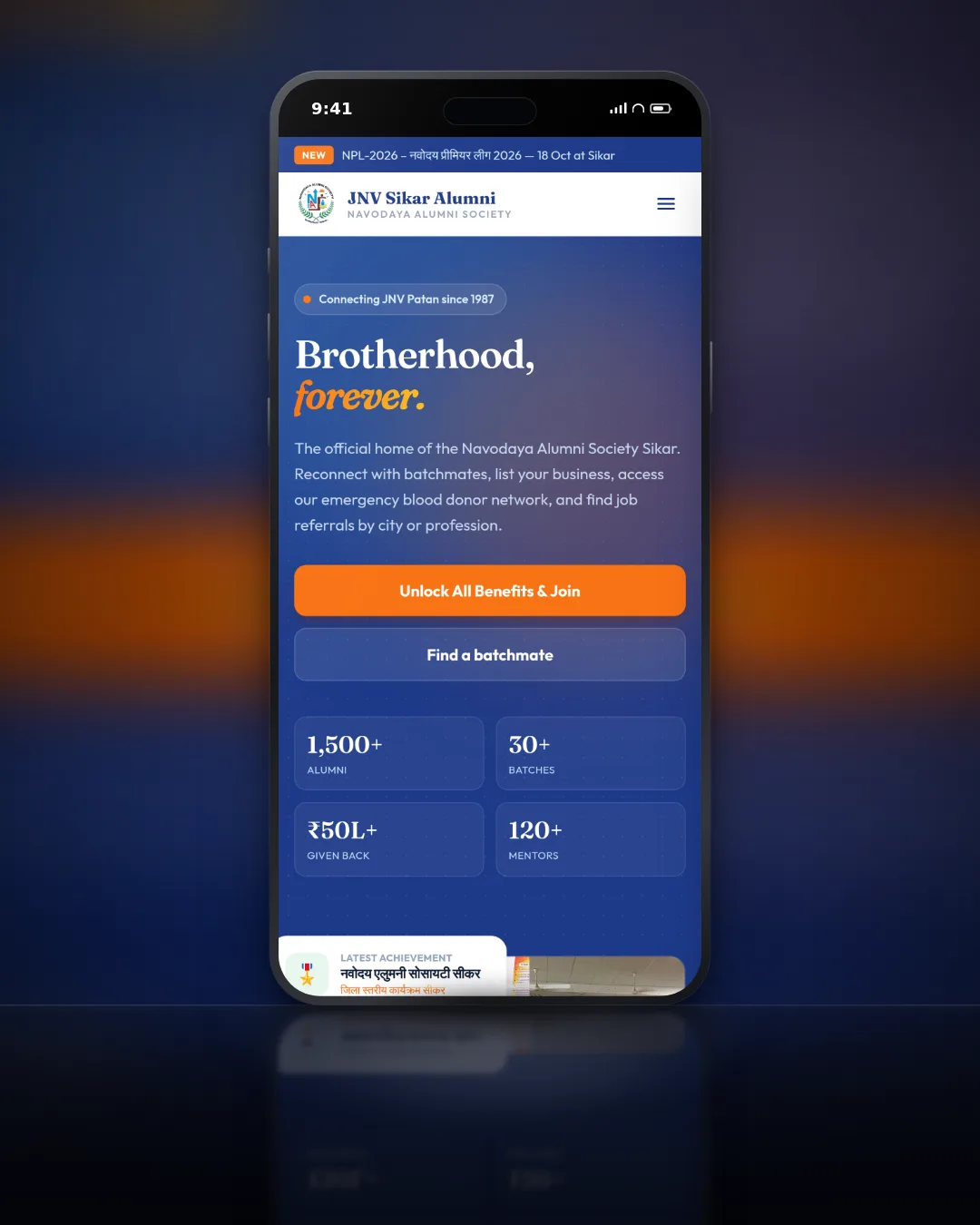
Education / Non-Profit · CodeIgniter 4
3 Live user roles
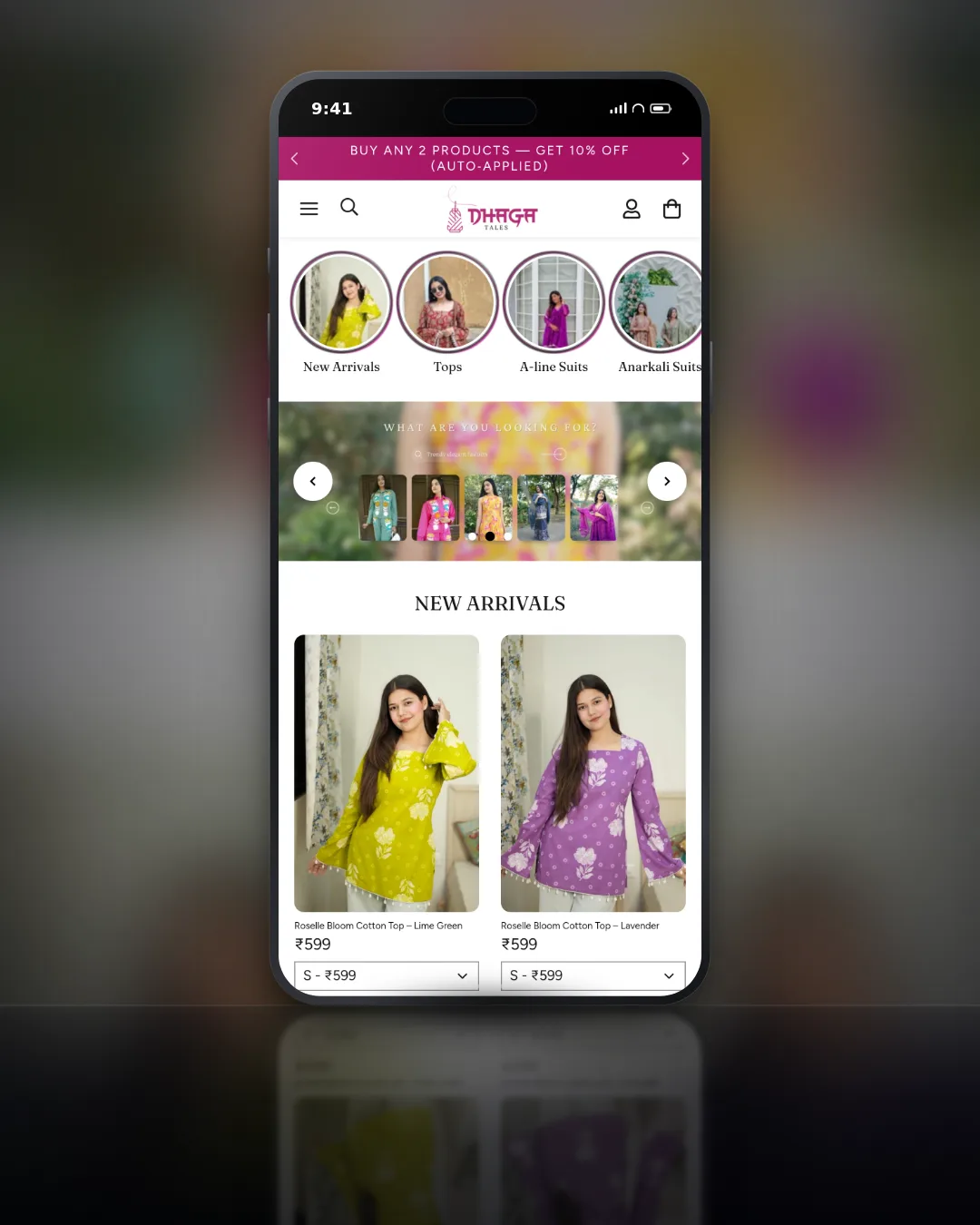
Fashion & Apparel · Shopify
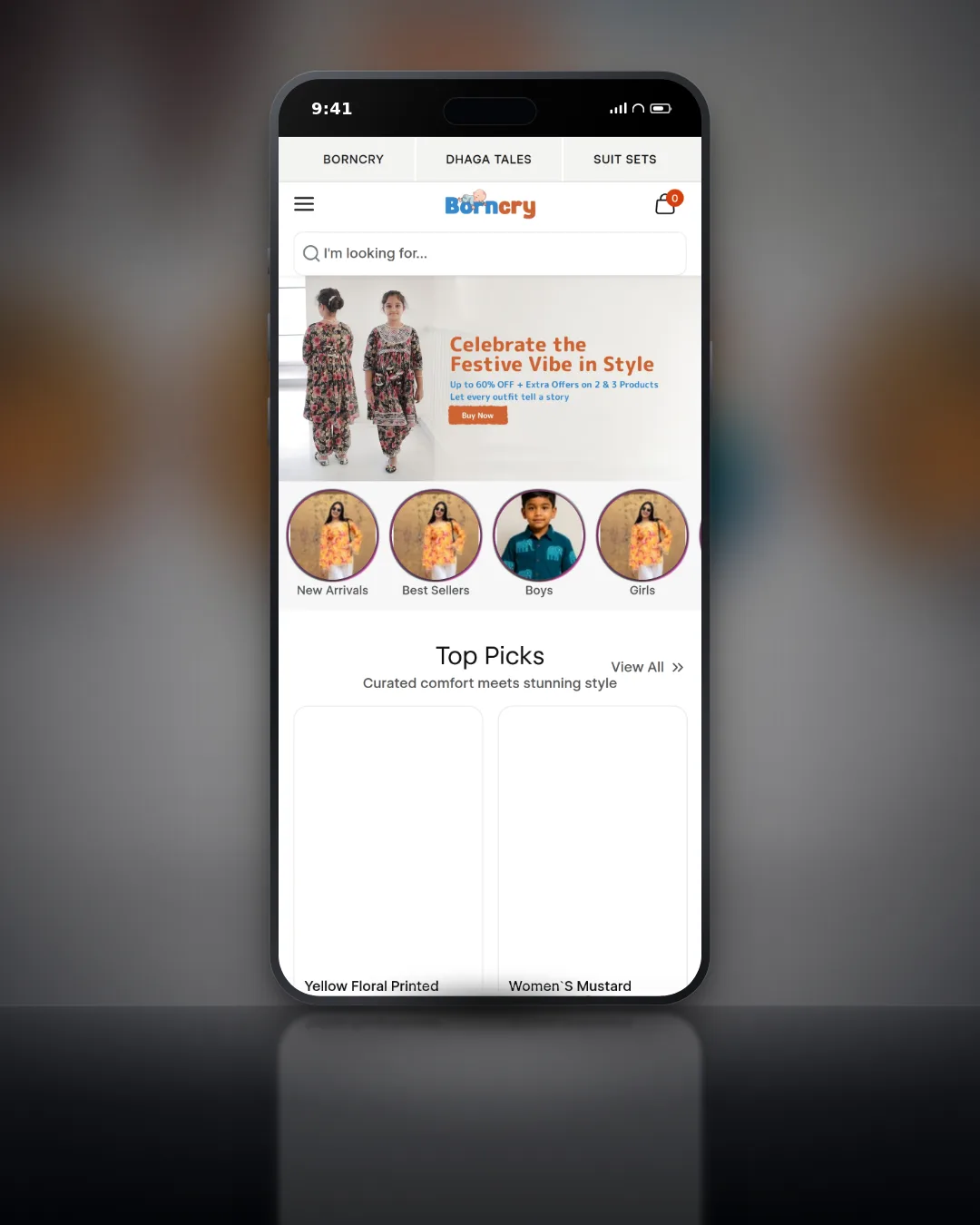
Fashion & Apparel · Shopify

Fashion & Apparel · Shopify
See every case study
Shopify, WordPress and custom builds, with the brief, the work and the result.
View all workPricing
You pay once for the build, not every month for every recommendation shown. Most stores start with recommendations or search and add the rest later.
Product Recommendations
Recommendations built natively into your store.
Rs 40K to 90K
3 to 4 weeks
AI Search and Recommendations
The two highest-impact capabilities together.
Rs 80K to 1.8L
5 to 7 weeks
Full AI Personalisation Suite
Every capability, built and tuned for your store.
Rs 1.8L +
8 to 14 weeks
All prices exclude GST. Third-party API costs are passed through at cost.
Not sure which one to start with?
Get the free store audit. We check your catalogue and data and tell you which capability will pay back first.
FAQ
If your question is not here, ask us in the form and you will get a straight answer.
Recommendation engines start showing useful results with around 50 to 100 SKUs and a few weeks of purchase data. Below that, we usually set up rule-based recommendations that are still dynamic, and switch to AI once enough data has built up. The catalogue audit tells you honestly where your store stands.
Usually, yes. Most recommendation apps charge a monthly fee for features we can build natively into your theme. A native build is tuned to your own catalogue and customer behaviour instead of a general algorithm, and there is no fee that grows as your traffic grows.
Built-in related products use one general approach for every store and give you little control. Our recommendations combine collaborative filtering (what similar customers bought), content-based matching on product attributes and live behaviour signals, and you set the business rules on top.
No. Recommendation and search results are precomputed and cached, not calculated live on every page load. We record Core Web Vitals before we start and test again after every deployment, so any speed change is caught before your customers notice it.
Shopify and WooCommerce. We build stores on both platforms ourselves, so we handle the AI layer and the store integration in-house. On Shopify the features sit in your theme as sections and blocks; on WooCommerce they are added to your theme templates without relying on a heavy plugin.
Usually product recommendations or AI search, because both start helping quickly and improve as data builds up. The free store audit looks at your catalogue, traffic and current tools and recommends the one most likely to pay back first for your store.
We track before and after: average order value, engagement with recommendations and search, and conversion on the pages that changed. Monthly reviews and model tuning are included for the first 60 days, so the results are checked against your own analytics, not a vendor dashboard.
There are no per-recommendation fees. Third-party API costs, for example for language models used in search, are passed through at cost with no mark-up, and the store audit estimates them up front. Hosting for a vector database, where one is needed, is quoted in the proposal.
Yes. We generate product descriptions in batches from structured product attributes, with a consistent brand voice and SEO meta descriptions, followed by human review. It is often a good first project for stores with a large catalogue and thin product copy.
The map pack is ranked on three things Google names publicly, and only two of them are yours to change. Here is what that means in practice for a Jaipur business, and which of the usual local SEO advice is a waste of your time.
Most of the risk in a WooCommerce to Shopify move is not the product data. It is the URL map, the things that were plugins and now have to be rebuilt, and in India the payment gateway, which does not come across at all.

Shopify handles a lot of technical SEO for you and leaves a specific set of problems it cannot fix. Here is which pages to fight for, the duplicate URL trap every store has, and what to do about supplier product copy.
Free store audit
Send your store address. We look at your catalogue, data and current apps, and reply with where AI would help first.
Free store audit
Your catalogue, data and current apps checked, in plain language.
Fixed-price proposal
The first capability to build, the timeline and the price.
Measured after launch
Before and after tracking, with 60 days of tuning included.
Your store link and the platform you are on are enough to start.