01
Questions arrive at 11 PM
A customer about to check out wants to know if their size is in stock. Nobody replies until morning, and by then they bought somewhere else.
Reply next dayInstant answer


Custom AI chatbots for websites, WhatsApp and Shopify stores: customer support, lead qualification, order tracking and product recommendations. Built on Claude or GPT-4 with Flowise, grounded in your own knowledge base, connected to your store and CRM, and handed to a person whenever it should be.




Grounded answers, not guesses.
Your FAQs, policies and product data go into a knowledge base the bot searches before it answers. When it is not sure, it says so and brings in your team.
The problem
Most customer questions repeat: return policy, delivery time, size guide, order status, payment options. Each one is either team time or a lost sale when the reply comes hours later.
A customer about to check out wants to know if their size is in stock. Nobody replies until morning, and by then they bought somewhere else.
"Do you deliver to Hyderabad?" "Can I change my order?" Your team knows the answers by heart because they type them all the time.
Someone reads your services page for minutes, then leaves without filling the form. A bot that asks the right question at the right moment turns that into a lead.
The most common post-purchase question, answered manually from a dashboard, when a bot connected to Shiprocket can answer it from live data.
Customers expect WhatsApp replies in minutes. A slow first reply reads as poor service, even when the message came in at midnight.
A sizing doubt on a product page ends in a wrong-size order and a return, or an abandoned cart. A product-aware bot answers before it happens.
What we build
Most clients start with one and add others on the same knowledge base and the same infrastructure later.
Trained on your FAQs, returns, shipping and catalogue. Answers instantly and hands complaints, refunds and complex cases to WhatsApp or email with the full context.
Most common
Welcome message, menu-driven flows, order status via Shiprocket and lead capture with a CRM push, all within Meta's WhatsApp Business API policy.
India-first channel
Appears at the right scroll depth or on exit intent, asks budget, timeline and needs, then books a call or sends the lead to your CRM or WhatsApp.
B2B and services
Live status from Shiprocket or Shopify by order number, plus returns, exchanges, invoices and delivery changes after purchase.
eCommerce stores
Asks about the occasion, budget and preferences, then shows matching products with live stock and prices through the Shopify Storefront API.
Fashion and D2C
Answers staff questions from your SOPs, product documents, price sheets and policies, on Slack, a web portal or WhatsApp.
Teams and internal use
How it answers
We use retrieval-augmented generation (RAG). The bot looks up the right part of your own content before it writes a reply, so answers come from your policies and products, not from whatever the model happens to remember.
FAQs, policies, product data and past support chats.
Split into passages and stored in a vector database such as Qdrant or Pinecone.
Each question finds the passages that match it best.
Claude or GPT-4 writes the reply from those passages only.
Below the threshold, the bot says so and brings in a person.
Illustrations.
Channels
One knowledge base can serve every channel. What each channel can do differs a little, so here is the honest version.
| Capability | Website |  WhatsApp |
 Shopify |
|---|---|---|---|
| FAQ and support questions | |||
| Lead capture and qualification | Partial | ||
| Order tracking with Shiprocket | |||
| Product recommendations | Partial | ||
| Broadcast and proactive messages | |||
| CRM push on lead capture | |||
| Human handover | |||
| Analytics dashboard | Via WhatsApp manager |
Builds
Three deployments for real businesses, with the bot type, the platform and the stack behind each one.
Travel and events, Jaisalmer
Bot type
Lead qualification
Platform
Website and WhatsApp
The contact form only caught visitors who read to the bottom of the page. The bot meets them mid-browse, and leads arrive in WhatsApp with destination, dates, group size and budget already filled.
Flowise
Claude API
n8n
Agency website, Jaipur
Bot type
Service discovery and brief capture
Platform
Website and WhatsApp
The bot appears on service pages when a visitor shows real intent. Leads arrive knowing the service, platform and budget range, and discovery calls are booked from the chat.
Flowise
Claude API
Ethnic wholesale, Jaipur
Bot type
Support and order tracking
Platform
Shopify and WhatsApp
Order status, dispatch timelines, return policy and minimum order are answered by the bot. Tracking comes from live Shiprocket data; the team handles negotiations and new trade accounts.
Flowise
GPT-4
 Shiprocket
And for several other clients: FAQ bots with escalation on websites, built with Flowise, the Claude API and a RAG knowledge base, for a 24/7 first response.
Tech stack
We are not locked to one AI provider. Each layer is picked for your use case, cost and quality needs.
Claude API from Anthropic or GPT-4 from OpenAI, chosen on your use case, cost and the quality you need.
Your FAQs, policies and product data embedded in a vector database, so the bot retrieves the right passage before it answers.
Conversation logic, escalation routing, CRM pushes and API calls built in Flowise or n8n.


Shopify Storefront API, Shiprocket tracking, Razorpay webhooks, Calendly, the WhatsApp Business API and your CRM, such as Zoho or HubSpot.
Accuracy and control
A chatbot that makes things up costs more than it saves. These are the controls built into every bot we deliver.
Discuss your chatbotGrounded in your content
Every answer comes from your knowledge base through RAG, not from the model's general memory.
Confidence threshold
Below a set confidence the bot says it is not sure and offers your team instead of guessing.
Tested before launch
Accuracy checked against 50+ variations of real questions, with edge cases written down.
Escalation by design
Complaints, refunds and complex cases go to a person with the full conversation attached.
Hinglish and Indian languages
Replies in the language the customer writes in. Regional languages are tested during the build and any gaps flagged.
Logs reviewed
Conversation logs reviewed weekly in the first month; missed questions are added to the knowledge base.
How we build
An FAQ and support bot takes 2 to 3 weeks; a full multi-channel build 3 to 5 weeks. Scope is agreed in writing before the build starts, and you test on staging before go-live.
Week 1
We collect FAQs, policies, product data and past support chats, find the top 20 query types, and agree what the bot handles and what goes to a person.
Weeks 1 to 2
Content embedded in the vector database, flows designed: opening message, intent detection, question trees and escalation triggers. You review it all.
Weeks 2 to 4
Connected to your site, WhatsApp or Shopify; Shiprocket, Calendly and CRM tested; accuracy checked against 50+ query variants on staging.
Launch and after
Live, with logs reviewed weekly for the first month and a monthly report: queries handled, escalation rate and top unanswered questions.
Typical full chatbot build
Client work
A full public-facing alumni site plus a 3-tier role-based admin system in CI4 with Student, Super Admin, and Batch Coordinator roles.
Read the case study3 Live
User Roles
9
Admin Pages
8
Public Pages
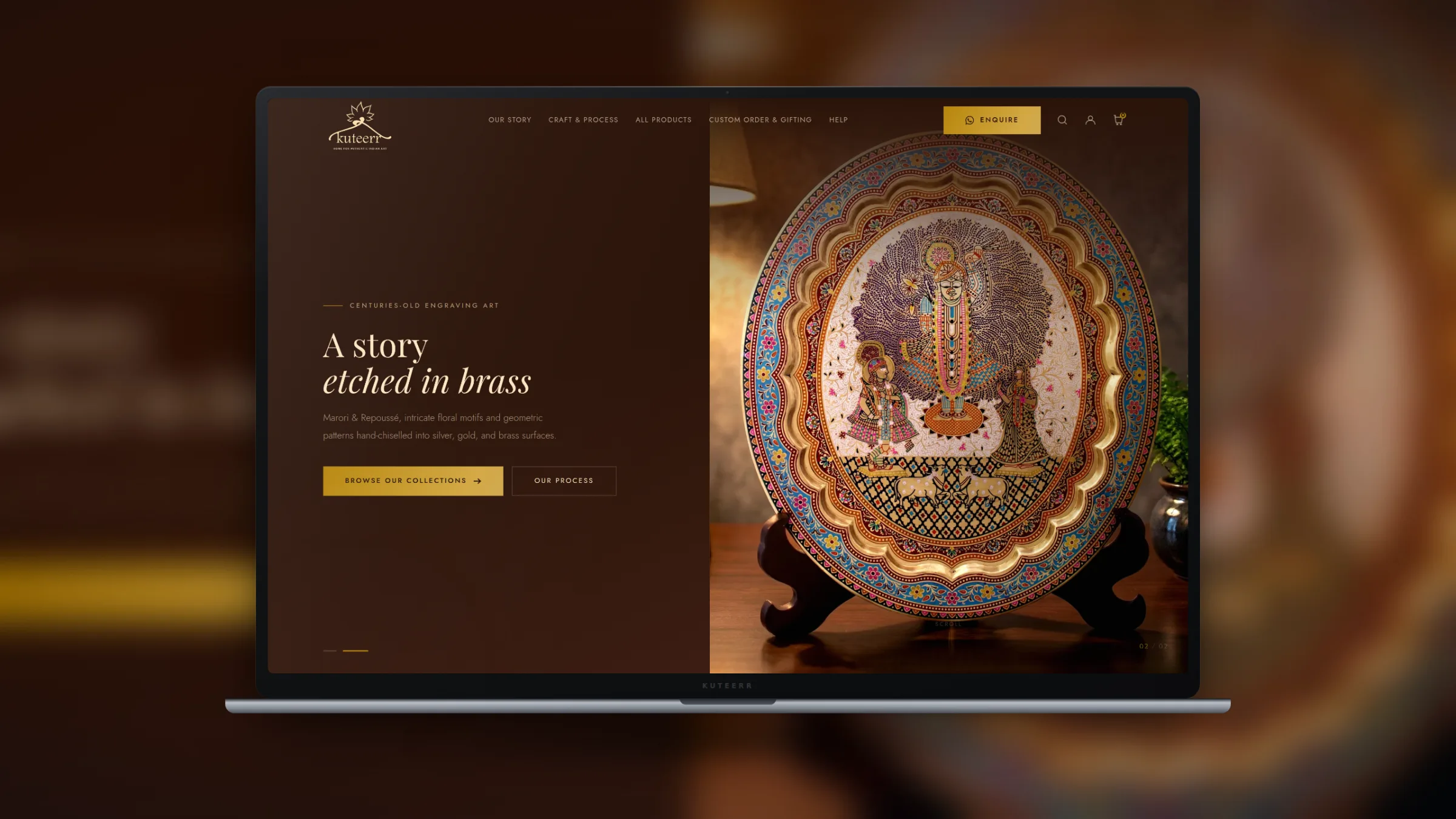
Handicrafts & Decor · Shopify
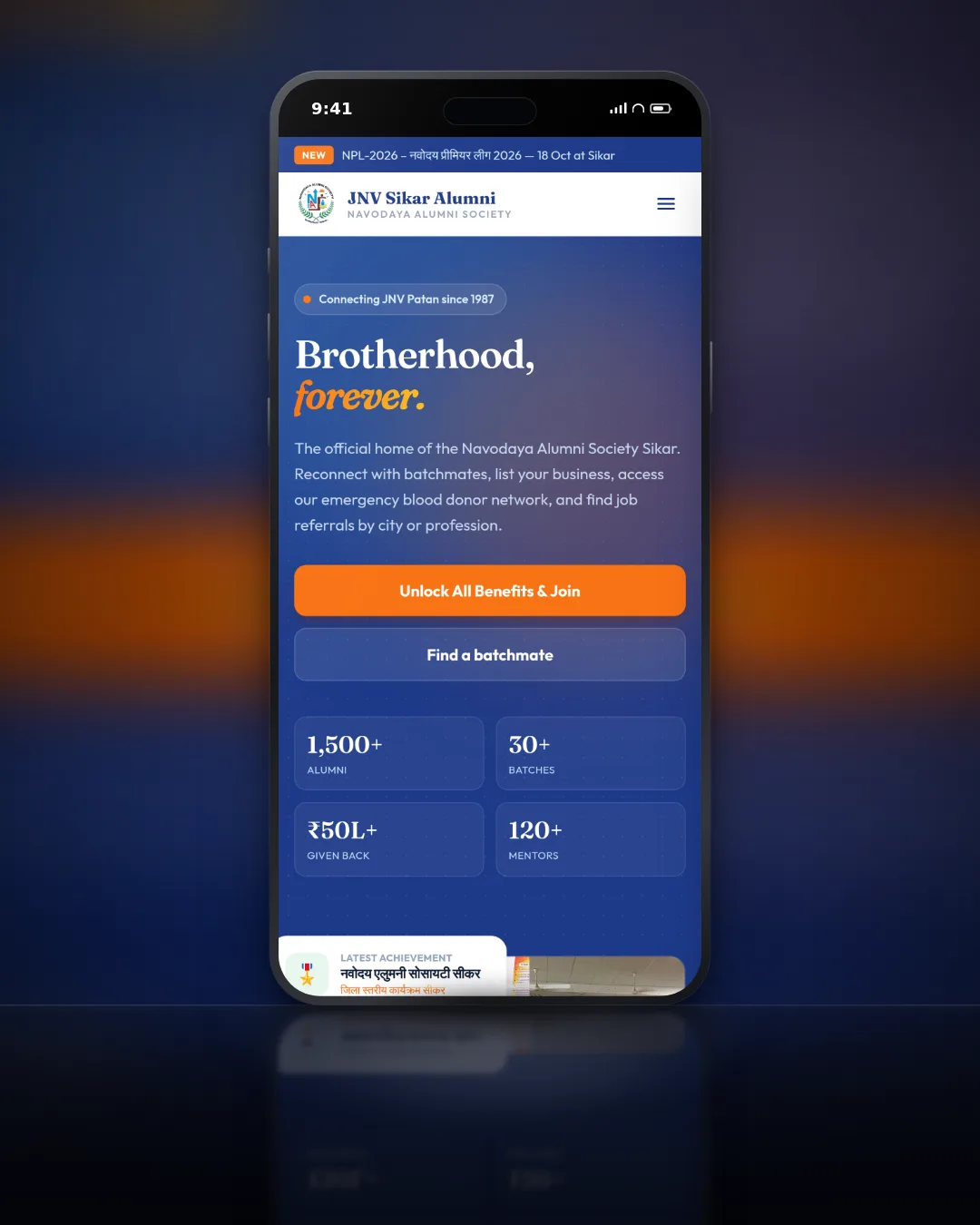
Education / Non-Profit · CodeIgniter 4
3 Live user roles
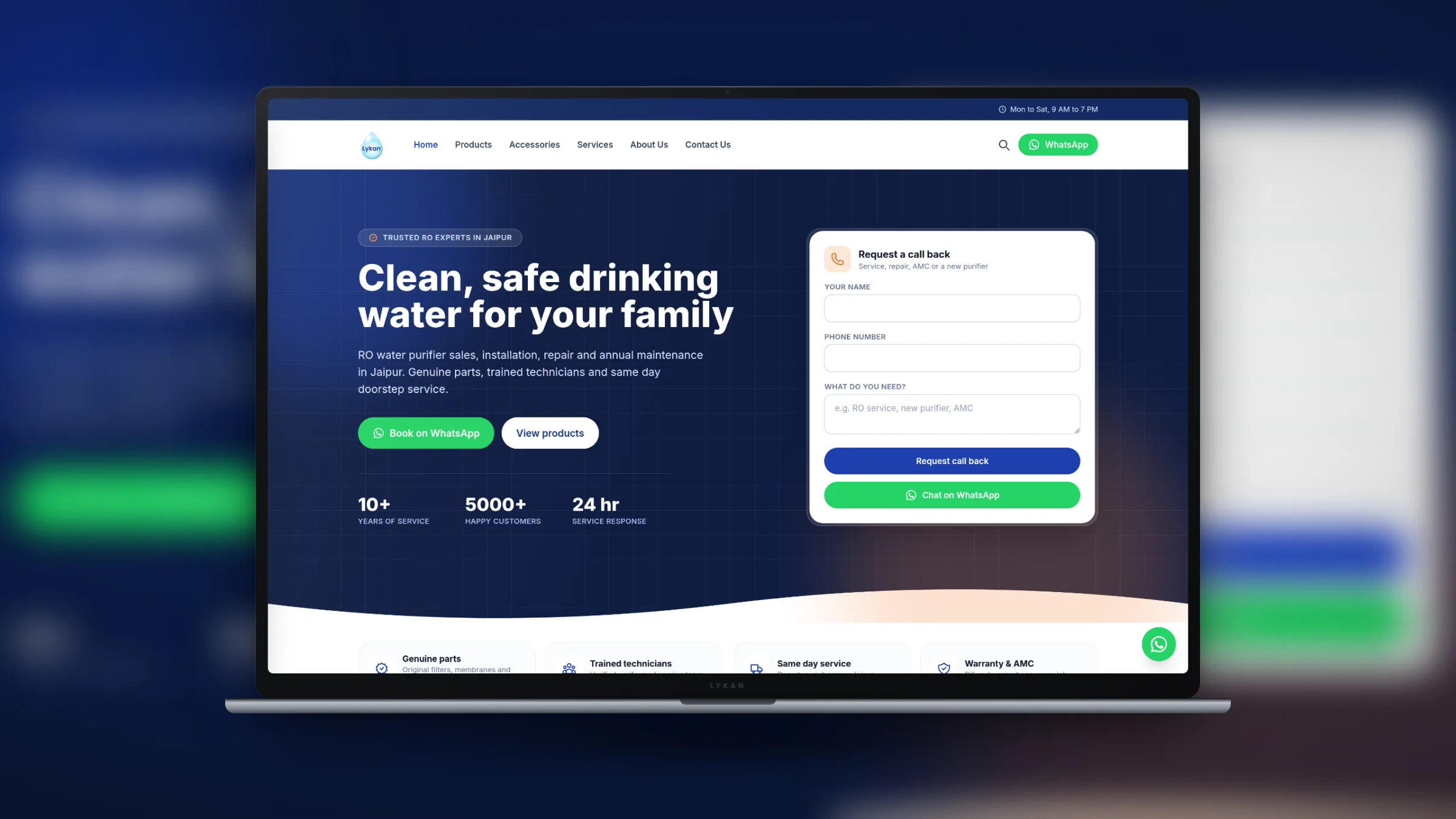
Home Services · Laravel
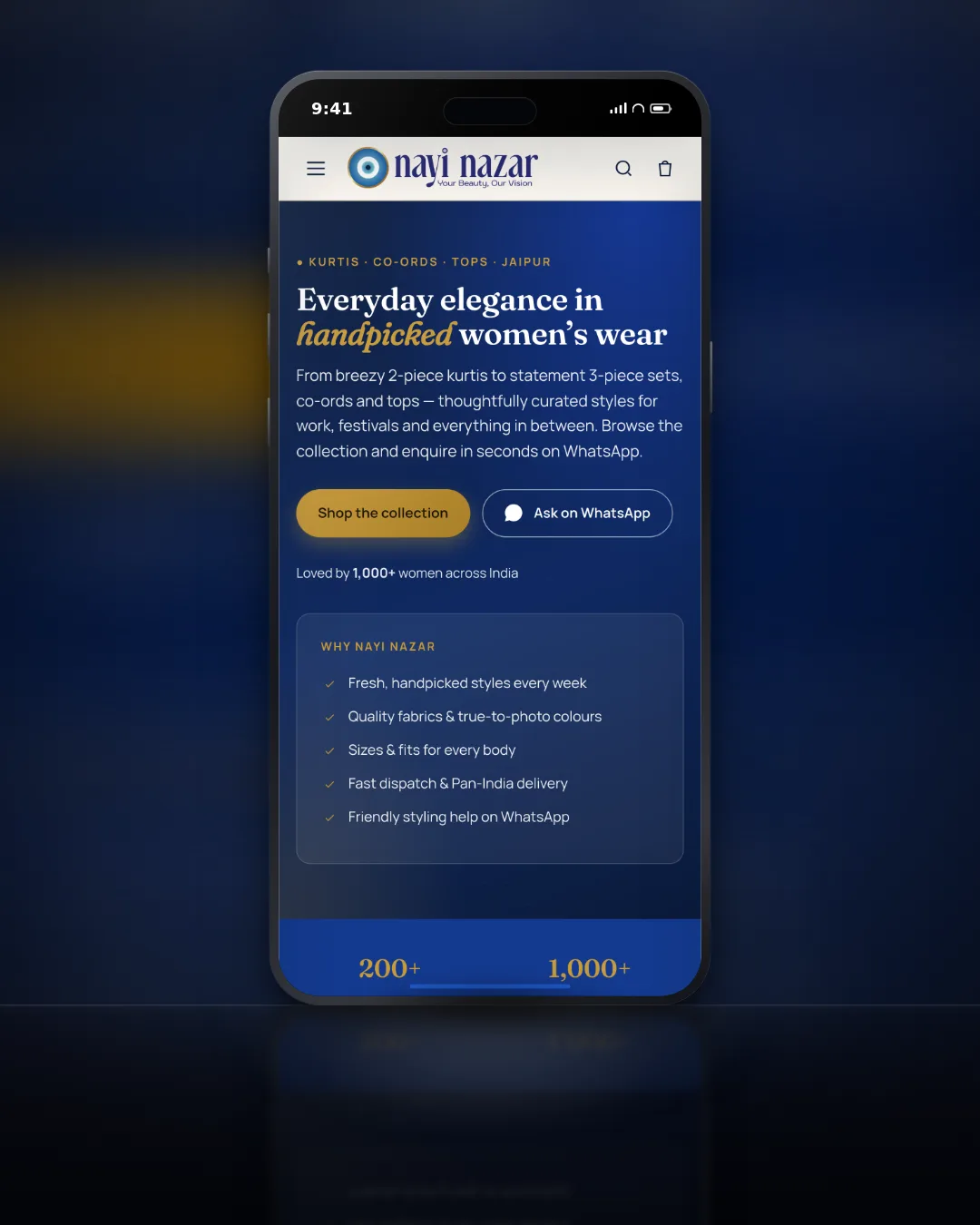
Fashion & Apparel · WordPress
Automated whatsapp enquiries
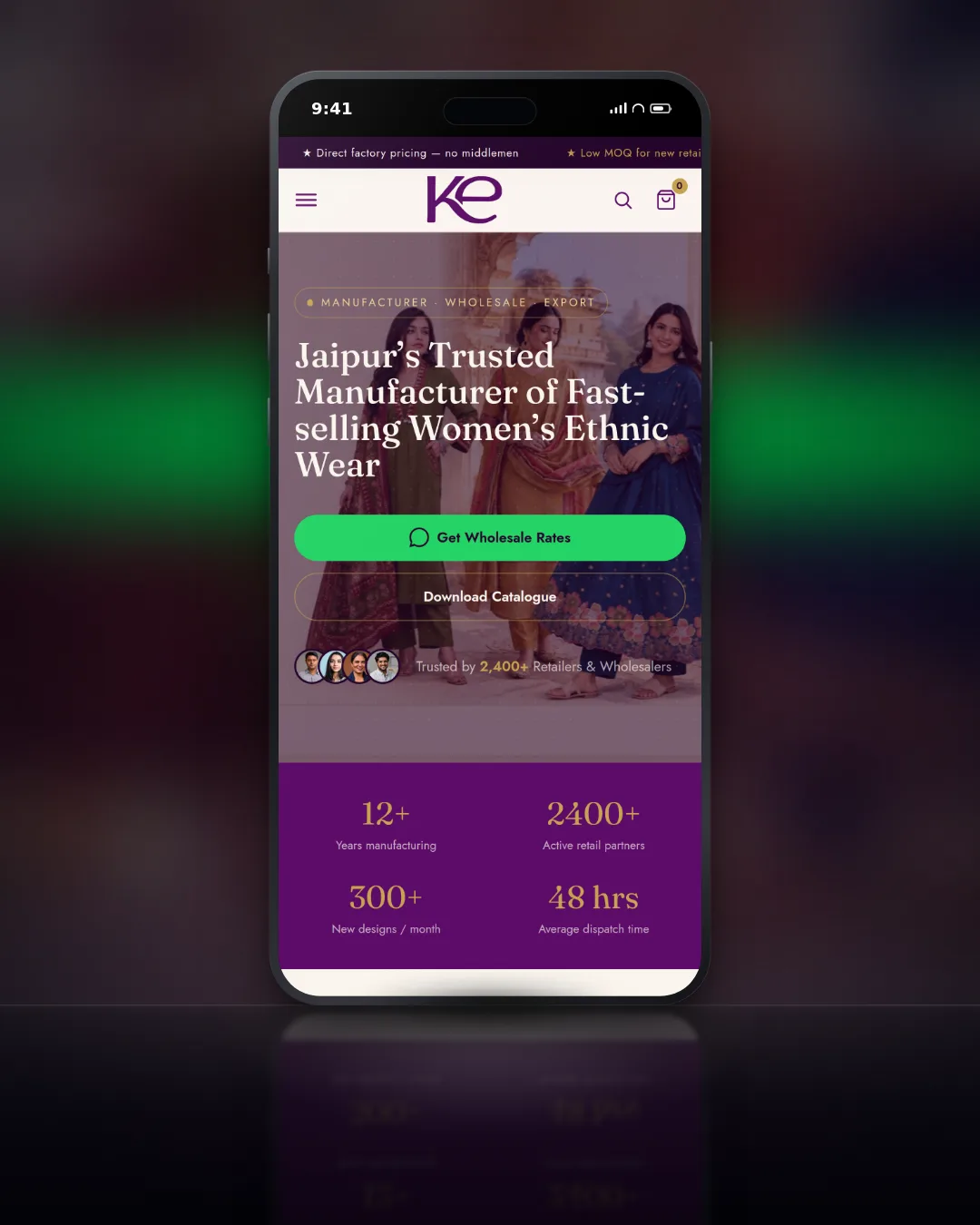
Wholesale / Fashion · WordPress
Automated enquiry flow
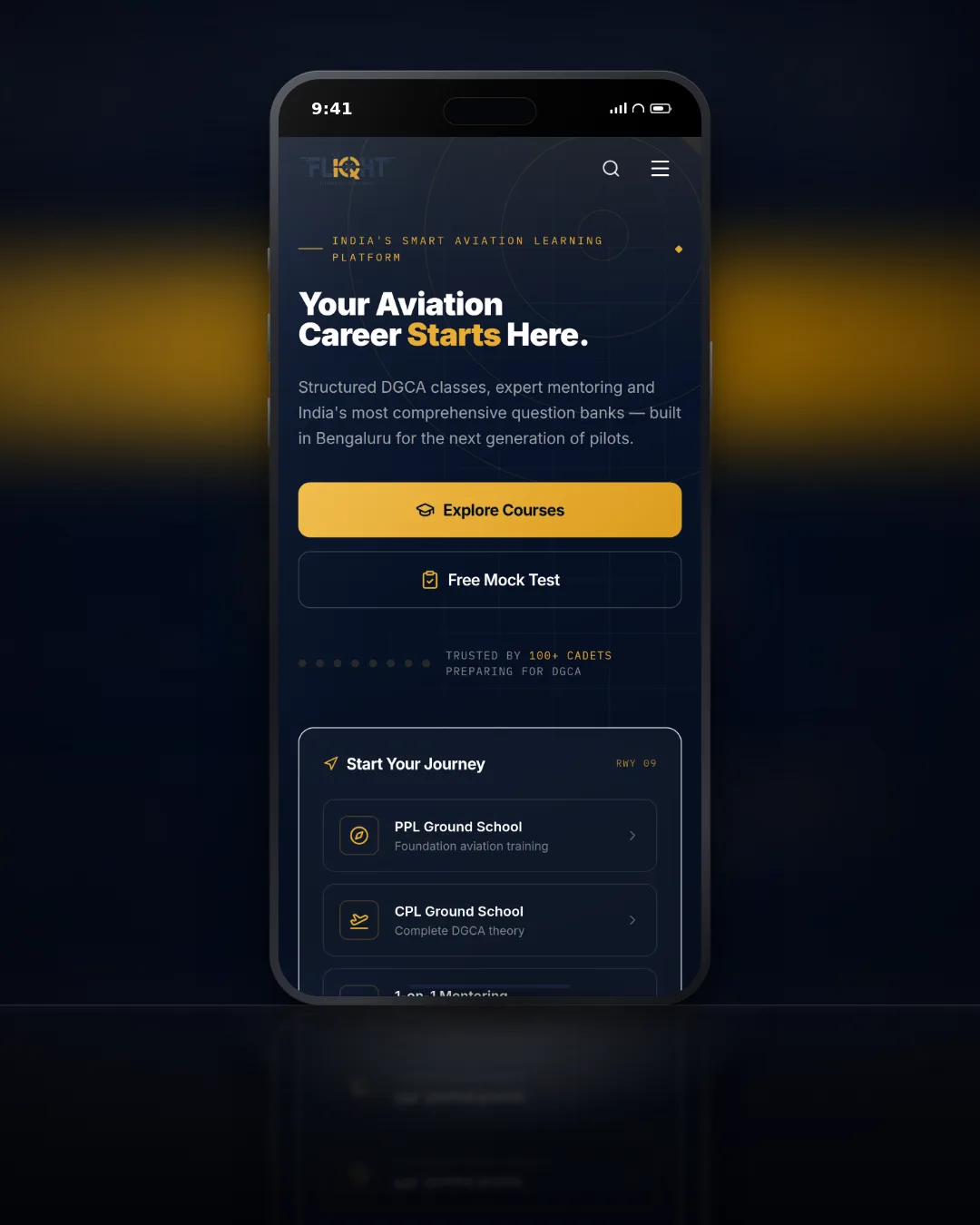
EdTech & Aviation · EdTech
18 issues found
See every case study
Shopify, WordPress and custom builds, with the brief, the work and the result.
View all workPricing
You own the chatbot after delivery. Ongoing monitoring, knowledge base updates and accuracy work are available on a monthly retainer.
FAQ & Support Bot
A website chatbot trained on your FAQs and policies.
₹25,000 to ₹50,000
2 to 3 weeks
Full Chatbot Build
Website and WhatsApp, with integrations and analytics.
₹60,000 to ₹1,40,000
3 to 5 weeks
Monthly Monitoring Retainer
Recommended for the first 6 months after launch.
₹8,000 to ₹18,000 /month
Ongoing
All prices exclude GST. LLM API costs (OpenAI or Anthropic) pass through at cost, typically ₹2,000 to ₹8,000 a month depending on query volume.
Not sure which bot you need?
Send us your most common customer questions. We tell you what a bot could handle, on which channel, and quote a fixed price.
FAQ
Want to know what a chatbot would do for your business? Ask in the form and we will walk you through it.
That is the main risk, so we design against it. Answers are grounded in your own knowledge base through retrieval-augmented generation, not generated freely. Below a set confidence threshold the bot says it is not sure and connects the customer with your team. We test against 50+ query variants before launch.
Either, depending on your use case, cost and quality needs. We are not locked to one provider. The model only writes the reply; the facts come from your knowledge base, and the conversation logic lives in Flowise or n8n, so the model can be changed later without rebuilding the bot.
LLM API costs from OpenAI or Anthropic pass through at cost, typically ₹2,000 to ₹8,000 a month depending on query volume. On WhatsApp, the provider platform fee and Meta's message charges also apply. The optional monitoring retainer is separate and covers reviews and knowledge base updates.
Yes. Claude and GPT-4 both handle Hinglish and many Indian languages well, and the bot replies in the language the customer writes in. For purely regional languages such as Tamil, Bengali or Marathi, quality varies by model and language, so we test them during the build and flag any gaps before launch.
Escalation is designed in from the start. The bot admits the limit, collects contact details if it does not have them, and routes the chat to your team on WhatsApp or your helpdesk with the full conversation. Unanswered questions are logged and added to the knowledge base in the next update.
Yes, and it is designed to be easy. The knowledge base is built from documents you can edit, such as Notion pages, PDFs or a spreadsheet. We re-embed changes on each update cycle: monthly on the retainer, or on request outside it. Simple additions can be handled by your team with our documented steps.
Yes. We connect to Zoho CRM, HubSpot, Freshdesk, Intercom and custom systems through their APIs or webhooks. Leads go in with name, email, phone and conversation context; support escalations can open a ticket with the transcript attached. If your system has an API, we can usually connect to it.
You do. After delivery the bot, its flows and the knowledge base are yours, and the AI and messaging accounts stay in your name. If you stop working with us, the bot keeps running on your accounts, and the documentation we hand over shows how it works.
The map pack is ranked on three things Google names publicly, and only two of them are yours to change. Here is what that means in practice for a Jaipur business, and which of the usual local SEO advice is a waste of your time.
Most of the risk in a WooCommerce to Shopify move is not the product data. It is the URL map, the things that were plugins and now have to be rebuilt, and in India the payment gateway, which does not come across at all.
Shopify handles a lot of technical SEO for you and leaves a specific set of problems it cannot fix. Here is which pages to fight for, the duplicate URL trap every store has, and what to do about supplier product copy.
Discuss your chatbot
Custom AI chatbots for website, WhatsApp and Shopify, trained on your own content and delivered in 2 to 5 weeks. You own it.
Discovery call
Your channels, your most common questions and what the bot should hand over.
Fixed-price proposal
Bot type, channels, integrations, timeline and running costs in writing.
Live in 2 to 5 weeks
Tested on staging first, then monitored closely after launch.
Your website and the questions customers ask most are enough to start.