Official Shopify Partner

Same traffic.
Twice the orders.

Conversion rate optimization for Shopify stores. Instead of buying more visitors, we fix the reasons the visitors you already have walk away: pages that load too slowly, product pages that do not answer the obvious question, carts that lose people, and checkouts that make paying harder than it needs to be.

+38%
conversion rate, Pro Ase Sports
1.8s
load time, down from 4.9s
29%
prepaid orders, up from 18%
Delivery by Tue, free over 999
In one picture

What conversion rate optimization actually means

Out of every hundred people who visit a Shopify store, roughly one buys. CRO is the work of making that two, without adding a single visitor or a single rupee of ad spend. Same traffic, same product, more orders.

Today 100 visitors, 1 buyer

The other 99 are not bad traffic. Most of them wanted the product. They ran into something on the way and left, and nothing in your reports tells you what it was.

After CRO 100 visitors, 2 buyers

One extra buyer in every hundred doubles your revenue from the same ad budget. That is the whole idea. Everything below is how we go about finding that second buyer.

Where they go

Six reasons a ready buyer walks away

These are not guesses. They are what we find, over and over, when we open up an Indian D2C store and watch what real visitors do on real phones.

The page is too slow

Most of your traffic is on a mid-range Android on a patchy connection. If the first image takes five seconds, they are gone before your store even appears.

4.9s before 1.8s after

The product page dodges the question

Will it fit. What is the fabric. When does it arrive at my pincode. What if it is wrong. Most pages offer a carousel and brand copy instead of answers.

Carousel and copy Answers

The cart makes them stop and think

Shipping that only appears at the end. A coupon box that sends them hunting for a code they never come back from. No easy way to keep shopping.

Separate page Side drawer

The checkout asks for too much

The most expensive place to lose someone, because everyone standing there has already decided to buy. Missing UPI, no one-tap login, a long form on a small screen.

5 steps 2 steps

Search cannot find your own products

Someone typing into your search box is the most ready buyer on the site. On most stores that box returns nothing useful, and they leave instead of browsing.

No results Instant results

The numbers you decide on are wrong

Purchases counted twice, a Pixel firing on the wrong event, GA4 and Shopify disagreeing by a third. Every decision made on top of that is a guess.

Three answers One answer
Drag the handle

The same product page, before and after

Nothing about the product changed. The photography is the same, the price is the same, the stock is the same. What changed is how quickly a buyer can answer their own questions and pay.

Before After
In stock, delivered by Tuesday
Size guide, fits true to size
UPI
Cards
COD
Large image, 4.9s to load
No size guidance
Delivery date unknown

Drag the handle, or use the arrow keys. Illustration of the changes we make, not a client screenshot.

The image loads first, not last

Right size, right format, loaded before anything else on the page.

Size and delivery answered on the page

The two questions that send people to WhatsApp, or away entirely.

One clear button, always in reach

Not competing with three other things of the same size and colour.

Payment options shown before checkout

Nobody should have to reach the last step to find out you take UPI.

Measured on a real phone

Speed is the first thing a buyer judges you on

Google scores every store out of 100 on a mid-range phone. This is what happened to Pro Ase Sports when we rebuilt the front end: same catalogue, same photos, same Shopify plan.

0Before

Mobile PageSpeed

0After

Mobile PageSpeed

Time until the page is usable

Before4.9s
After1.8s

What we changed to get there

Scripts bundled

On House of EZRO, 24 separate files became 7.

Apps audited

Every app costs speed. The unused ones come off.

Images resized

Right dimensions, right format, loaded in order.

Theme rebuilt on 2.0

So your team can edit sections without calling us.

The work itself

Four things we build, in this order

We are a development agency, so this is code in your theme rather than another app stacked on top. Every change goes on a duplicate theme first and can be rolled back in a click.

Step one

Make the numbers trustworthy

Before we change anything we make sure the reports are right. Pixel, Conversions API, GA4 and Shopify all reconciled to one figure, so you can tell afterwards whether anything we did actually worked.

Duplicate and missing events fixed
Heatmaps and session recordings set up
Step two

Make the store fast

The fix with the widest reach, because it helps every page and every visitor at once. This is front-end engineering inside the theme, not a plugin that promises to compress things.

Tested on real mid-range Android phones
Stays fast after your next campaign adds tags
Step three

Rebuild the product page and cart

The two screens that decide almost everything. The page gets built around the questions your support team answers every day, and the cart moves into a drawer so nobody loses their place.

Size, fit and delivery answered above the fold
Reviews placed where the doubt is, not at the bottom
Step four

Shorten the checkout

Fewer steps, UPI in one tap, and prepaid made the easy choice so fewer orders come back undelivered. We hold partner status with the checkout and payment providers, which matters on the day something breaks.

Before
Cart page Login Address Shipping Pay
After
Cart drawer One-tap UPI
Stores we have done this on

Readings taken before and after

Every number here was measured on the client's own store. Full write-ups sit behind each one.

All case studies
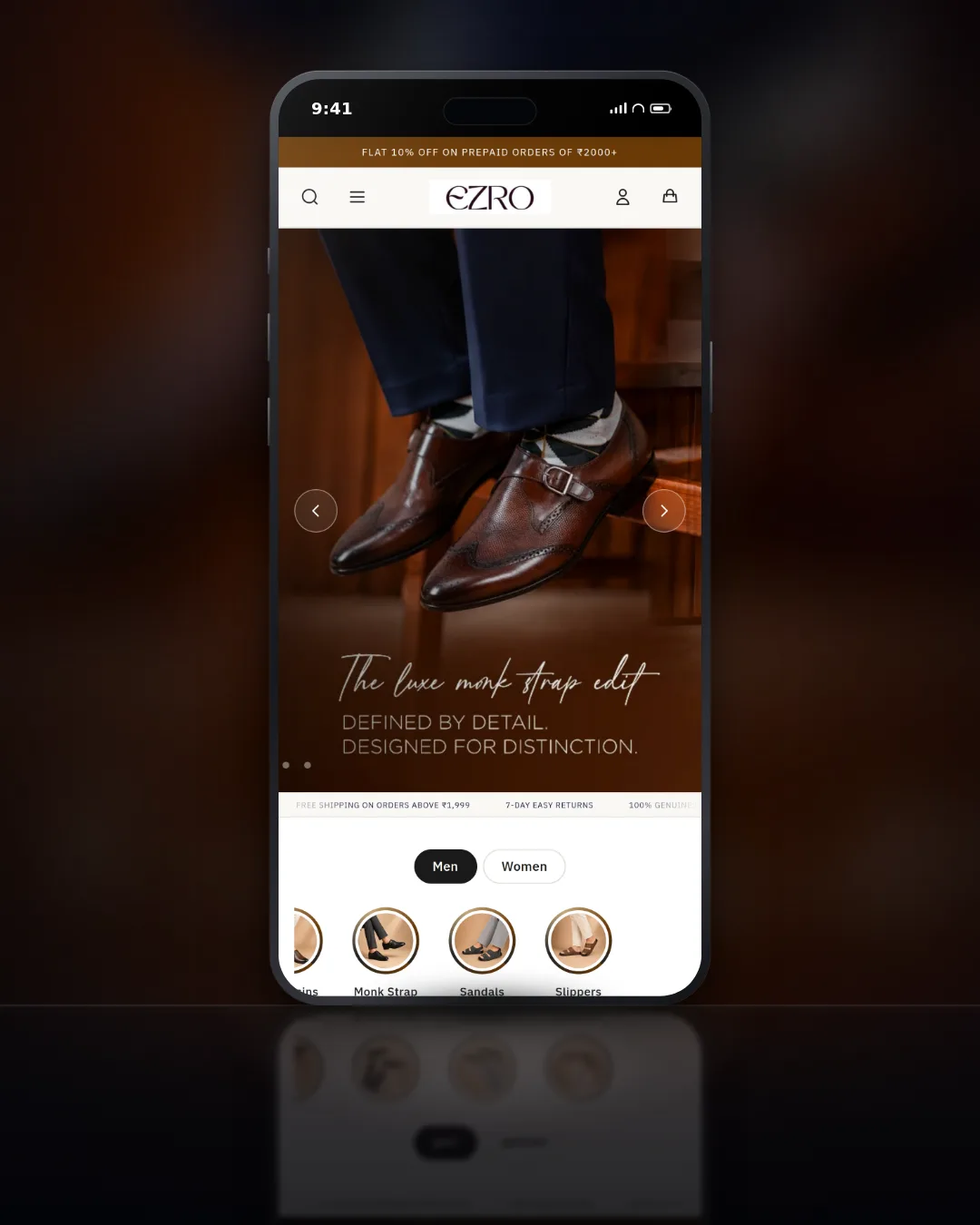
House of EZRO - Leather Footwear Store Fashion & Apparel
Shopify eCommerce

House of EZRO - Leather Footwear Store

Shopify store for a leather footwear brand, with a gendered mega menu across nine shoe categories, size-variant quick add and a shoppable video wall.

JS Request Count -71%
24 files 7 files
Cart Price Errors Fixed
Broken Consistent
Reels Autoplay Mobile Fixed
Stalling Working
View case study
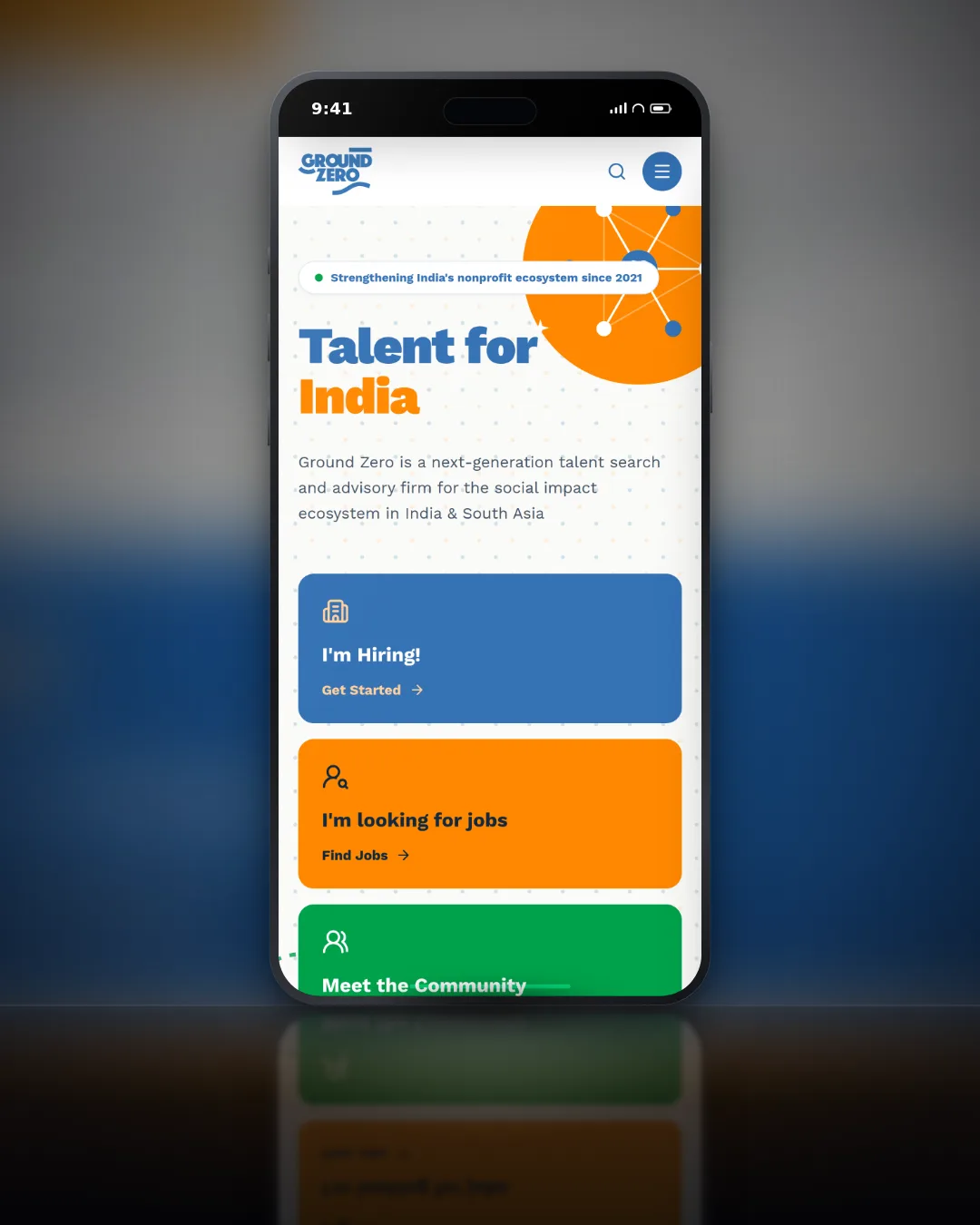
Ground Zero - Talent Search Platform Talent Search & HR Advisory
Recruitment Nonprofit

Ground Zero - Talent Search Platform

Laravel platform for a talent search and advisory firm serving India's social impact sector, combining a job board, an events and podcast archive and a blog behind one CMS.

Content Modules 4 Live
0 4
Admin Editability Full CMS
None Full CMS
Community Groups Active
None Growing
View case study
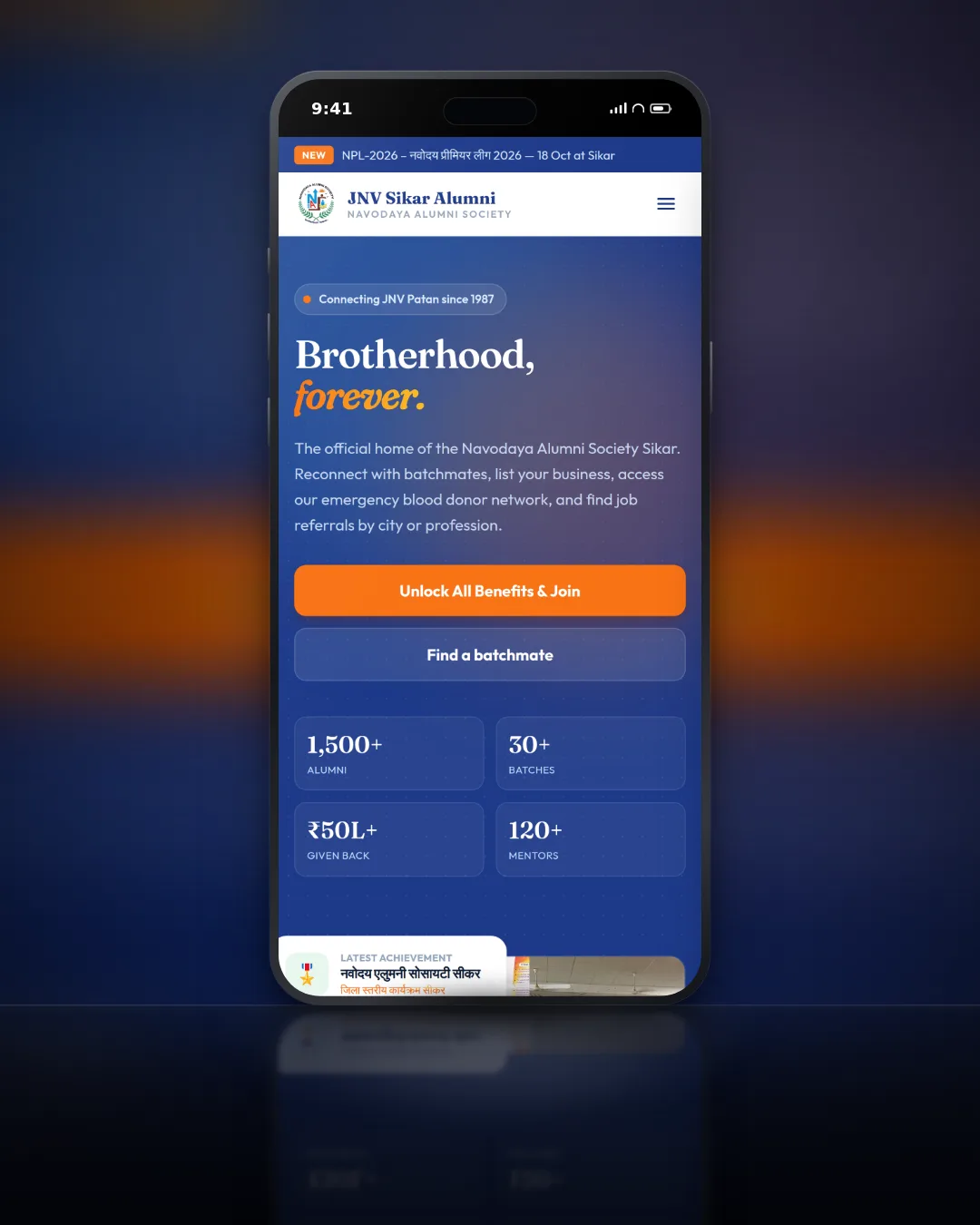
JNV Sikar Alumni — Portal & Admin System Education / Non-Profit
CodeIgniter 4 Role-Based Auth

JNV Sikar Alumni — Portal & Admin System

A full public-facing alumni site plus a 3-tier role-based admin system in CI4 with Student, Super Admin, and Batch Coordinator roles.

User Roles 3 Live
0 3
Admin Pages 9
0 9
Public Pages 8
0 8
View case study
How it runs

Five weeks, and you see something every week

No long silence followed by a big reveal. The audit lands in week one, and from week two changes go live one at a time so you can tell which one did what.

Included as standard

A named developer, not a rotating pool
Every change on a duplicate theme first
A rollback path for anything we ship
Documentation so your team can maintain it
1

Audit, week one

We go through the store on real phones, watch session recordings, and write down what is costing you orders, in the order it is worth fixing. This is the free part.

2

Fix the tracking, week one to two

So that when we change something, everyone can agree on whether it worked. Nothing else starts until this is right.

3

Ship the certain wins, week two to three

Speed, broken cart behaviour, missing payment methods, unanswered product questions. These do not need a test to justify, they need doing.

4

Test the judgement calls, week three to five

Offers, bundles, urgency, when to allow cash on delivery. Anything reasonable people disagree about gets tested rather than argued about.

5

Report and hand over, week five

Before and after on everything we said we would move, what worked, what did not, and what is worth doing next. You decide who does it.

Official partner or certified on the platforms this work touches

Shopify GoKwik Fastrr Checkout Razorpay PhonePe Cashfree Shiprocket Klaviyo Mailchimp Brevo
Meta Google Google Display Ads WhatsApp Business Microsoft Clarity Google Analytics Google Gemini Elementor Cloudflare Google Cloud Google Workspace DigitalOcean
Free, and yours to keep

A written audit of your store

Not a sales call with a slide deck. A document, written by the developer who would do the work, showing what is costing you orders and what each fix involves. You keep it whatever you decide, and you are welcome to hand it to another agency.

A speed report from a real mid-range phone, not a desktop test
Your product page and cart reviewed against what buyers ask
A tracking check: Pixel, Conversions API, GA4, duplicate events
Checkout and payment gaps named specifically
A fix list in priority order, with effort against expected impact
Delivered in 5 working days Read-only access is enough

Shopify CRO enquiry

Tell us what you are running today. We reply within one business day.

We respond within 1 business day. No automated follow-up sequences.

Straight answers

Before you ask

If yours is not here, put it in the form and you will get a real answer rather than a brochure.

For split testing to mean anything you want a few thousand visits a week. Below that, testing is theatre. But the biggest wins on most stores are not tests at all: speed, a broken cart, a missing payment method, a question the page never answers. Those are worth fixing at any size, and the audit looks for them first.
Only if the evidence says the theme itself is the problem. A redesign throws away everything the store has learned and usually costs you conversions for a month while it settles. Four changes that matter beat forty that do not. If a rebuild genuinely is right, the audit will say so and show why.
We write code inside your theme, on a duplicate first. Apps have their place, but each one adds scripts and a monthly fee, and app sprawl is one of the most common reasons a store is slow in the first place.
A flat fee, quoted line by line against the fix list in your audit, so you can see what each item costs before committing to any of it. Never a percentage of revenue and never an open-ended retainer. Taking the list and doing the work yourself is a perfectly reasonable outcome.
No, and anyone who does is guessing. It depends on your offer, pricing, traffic quality and category, and we control only part of that. What we commit to is a measured starting point, changes shipped on schedule, and honest before and after numbers, including for the changes that did not work.
Because an order that comes back undelivered is not revenue, it is two shipping charges. For Indian D2C brands, moving orders from COD to prepaid is often worth more than lifting the conversion rate itself, so we treat prepaid share as a headline metric rather than a footnote.
Yes, and it usually makes the ads work harder. What a media buyer needs from a store is clean tracking and a page that holds attention. We fix both, tell them what changed and when, and stay out of the ad account unless you want us in it.

Find out what is stopping your buyers

Official Shopify Partner, based in Jaipur, working with D2C brands across India and abroad.