
SEO rankings drop overnight
WooCommerce uses /product/blue-kurta; Shopify uses /products/blue-kurta. Without 301s every indexed URL returns 404 and Google sees a brand new site.
A complete redirect map is built and uploaded before DNS changes.
Full migration from WooCommerce, Magento, OpenCart, PrestaShop or a custom platform: products, variants, images, orders, customers, collections and metafields, with a 301 redirect for every old URL. Your store stays live until the moment we switch DNS.
Impulsebyte is a Shopify Select Partner.
Every Shopify Partner starts at the Registered tier. Shopify moves a partner up to Select on performance, measured on the merchants it works with and the new stores it brings to Shopify.
100%
Data transferred
301s
For every old URL
0
Sales downtime
Platforms we migrate from
Every platform has different data structures, URL patterns and export formats. We have moved stores off all of these: the approach is proven, not improvised.
Their URLs, mapped to Shopify
WooCommerce
old /product/blue-kurta
301
new /products/blue-kurta
A typical WooCommerce product address. Every product, collection, blog post and page gets its own line in the redirect map, so links and rankings carry over.
Magento 1 and 2
old /blue-kurta.html
301
new /products/blue-kurta
A typical Magento 1 and 2 product address. Every product, collection, blog post and page gets its own line in the redirect map, so links and rankings carry over.
OpenCart
old /index.php?route=product/product&product_id=42
301
new /products/blue-kurta
A typical OpenCart product address. Every product, collection, blog post and page gets its own line in the redirect map, so links and rankings carry over.
PrestaShop
old /12-blue-kurta.html
301
new /products/blue-kurta
A typical PrestaShop product address. Every product, collection, blog post and page gets its own line in the redirect map, so links and rankings carry over.
Custom PHP, CI4 or Laravel
old /p/42/blue-kurta
301
new /products/blue-kurta
A typical Custom PHP, CI4 or Laravel product address. Every product, collection, blog post and page gets its own line in the redirect map, so links and rankings carry over.
Other platforms
old /catalog/blue-kurta
301
new /products/blue-kurta
A typical Other platforms product address. Every product, collection, blog post and page gets its own line in the redirect map, so links and rankings carry over.
Why migrations go wrong
A DIY move, or an agency doing its first one, misses at least three of these. Each costs traffic, revenue or customer trust.
WooCommerce uses /product/blue-kurta; Shopify uses /products/blue-kurta. Without 301s every indexed URL returns 404 and Google sees a brand new site.
Images still pointing at the old server. The old server is switched off, and every listing shows a broken picture.
Passwords are hashed per platform and cannot be moved. Nobody told customers to reset, so they assume the worst.
Shopify allows three options per product. Stores with more option types need restructuring, not a blind import, or checkout breaks.
The store looks perfect, but Razorpay is not connected, shipping zones are missing and tax is wrong. Orders fail at payment.
GST filings, customer history and loyalty data depend on old orders. Once the old server goes, so do they.
Full data transfer
Title, description, price, compare-at price, weight, barcode, inventory and every variant option.
Downloaded and re-uploaded, with no dependency on the old server.
Manual and smart collections, products assigned, collection images moved.
Name, email, phone, addresses and tags, with a password reset invite after launch.
Line items, customer, address, totals and status, for accounting and support.
Articles and static pages, each redirected from its old path.
Products, collections, blog and pages mapped to their Shopify equivalent.
Fabric, size guide, care and specifications mapped to Shopify metafields.
The one thing that cannot move: passwords.
They are hashed with platform-specific algorithms. Every other piece of customer data moves, and each customer gets a Shopify account invite to set a new password. We plan that email with you so it reads as a store upgrade, not a security problem.
Large catalogues
No hard limit: we have scoped migrations up to 10,000 SKUs. Big catalogues go in batches through the Shopify API rather than CSV, which handles rate limits and validation better.
Also included
Your current design replicated on a Shopify theme, or a new theme configured to your brand.
Razorpay, Shiprocket or your providers connected and tested before go-live, with zones, rates and tax.
Titles, descriptions, canonicals, sitemap to Search Console, GA4 and Meta Pixel reinstalled.
Reviews, email, loyalty and upsell apps set up as the Shopify equivalents of what you run today.
Checkout, payments, emails, mobile, speed, redirects, analytics and fulfilment, all verified before DNS.
Our process
The old store stays live the whole time. The Shopify store is built and checked on a development URL, and DNS only moves once data, checkout, payments and redirects all pass.
Before work starts
Product count, order history, URL structure, custom data and integrations reviewed. You get a written scope: what moves, how and in what order.
On a development store
Theme chosen and matched to your design. Payments, shipping, tax and apps configured and tested.
Validated before cutover
Data exported, transformed and imported. Product counts and order totals checked, images confirmed, redirect map uploaded.
At a low-traffic hour
DNS TTL lowered a day ahead, cutover at night, recrawl requested in Search Console, the old server kept for 7 days as a fallback.
A typical 7 to 16 day migration
Why Shopify
| What | WooCommerce | Shopify |
|---|---|---|
| Site down on a plugin update | Happens | Not a risk |
| Hosting | You manage it | Included |
| PCI compliance | Your responsibility | Built in |
| Razorpay | Plugin | Supported gateway |
| Scaling for a sale | Server dependent | Global CDN |
| Checkout | Theme and plugin dependent | Built and tested by Shopify |
WooCommerce still has advantages for very complex B2B pricing, deeply customised checkout flows, or content-heavy sites built around WordPress. We will tell you if Shopify is not the right move before you commit.
After the migration
On WooCommerce a plugin update can take the checkout down. Shopify hosts the platform, so an app failing does not take the store with it.
Shopify's checkout is built and tested by Shopify, with UPI and cards live before DNS is switched. Nothing to keep PCI compliant.
Every product image sits on Shopify's CDN, served in modern formats at the right size, from a network you do not pay for.
Our work
A full Shopify 2.0 theme rebuild that increased conversion rate by 38% and boosted PageSpeed from 44 to 96.
Read the case study+38%
Conversion Rate
0.60% to 0.83%
+118%
PageSpeed Score
44 to 96
-63%
Page Load Time
4.9s to 1.8s

Fashion Accessories · Shopify
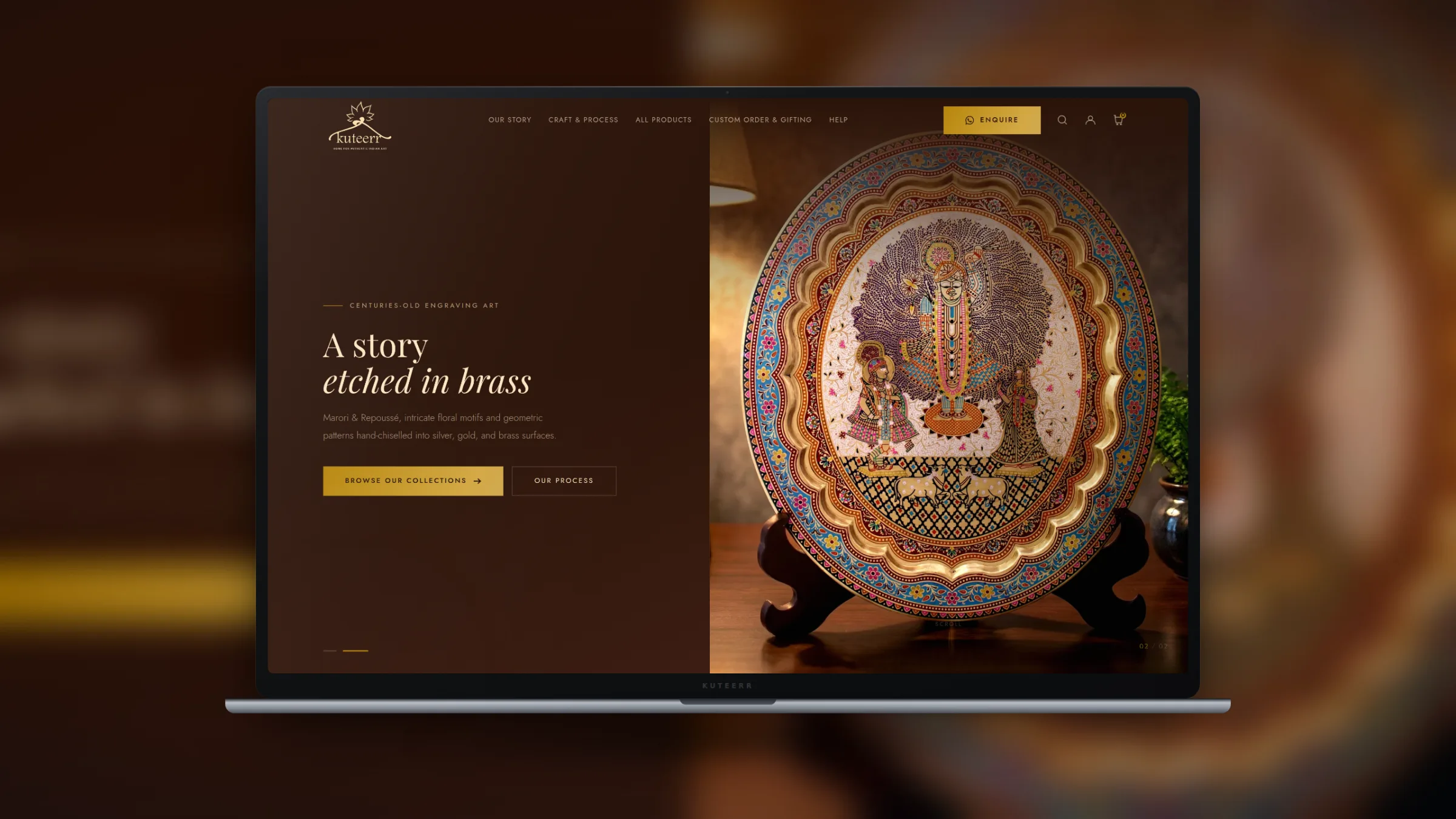
Handicrafts & Decor · Shopify

Fashion & Apparel · Shopify

Fashion & Apparel · Shopify

Fashion & Apparel · Shopify

Fashion & Apparel · Shopify

Fashion & Apparel · Shopify
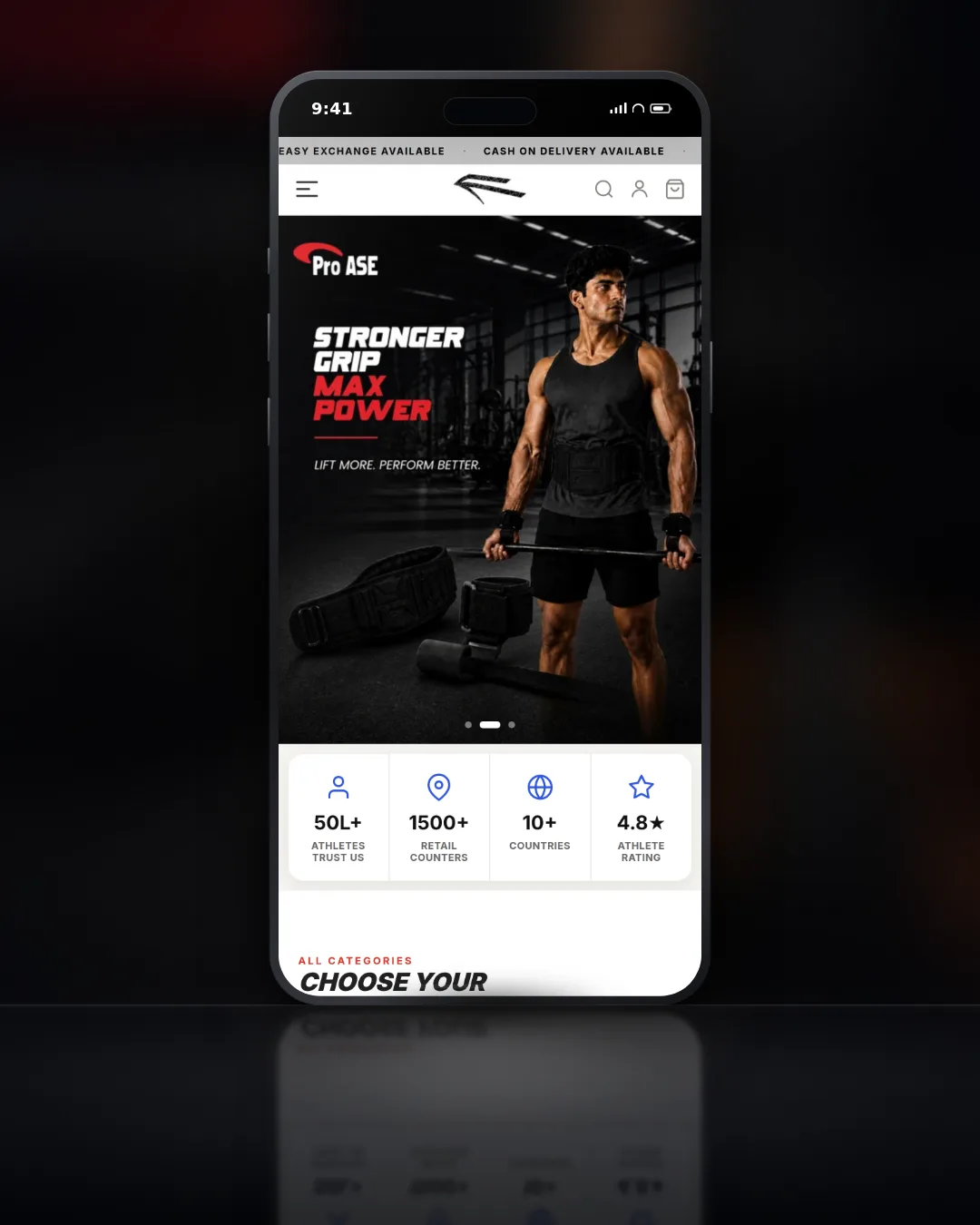
Sports Retail · Shopify 2.0
+38% conversion rate
See every case study
Shopify, WordPress and custom builds, with the brief, the work and the result.
View all workMigration specs
Data counts, redirect maps and QA checklists are on record for every one.
Swipe the table to compare
| Client | From | Products | Orders | 301 redirects | Timeline |
|---|---|---|---|---|---|
| Keeyara Wholesale | WooCommerce | 850 SKUs | Full history | All URLs | 8 days |
| NIJ by Indiloom | Custom PHP | 400 SKUs | Full history | All URLs | 6 days |
| Urbaneigh | WooCommerce | Full catalogue | Full history | All URLs | 10 days |
| Pro Ase Sports | Custom platform | Sports gear | Full history | All URLs | 7 days |
Pricing
Scope, product count and deliverables agreed before work starts. Your Shopify subscription is separate and billed by Shopify.
Starter
Up to 500 products.
₹18K to ₹35K
7 to 10 days
Growth
500 to 2,000 products.
₹40K to ₹80K
10 to 16 days
Enterprise
2,000+ products.
from ₹80K
3 to 5 weeks
All prices exclude GST. Shopify monthly plan not included.
Not sure what your migration involves?
Tell us your platform and product count. We reply with a scope, a timeline and an honest view on whether Shopify is the right move.
FAQ
Not sure if migration is right for you? Tell us about your current platform and we will give you an honest recommendation.
No. Your old store stays live throughout. We build and test the Shopify store on a development URL, and only switch DNS once data, checkout, payments and redirects are validated. The window where neither store is fully live is usually under 15 minutes, scheduled for 2 to 3 AM IST.
Not if the 301 redirects are right, and that is the most critical step. We map every product, collection, blog and page URL to its Shopify equivalent before DNS changes, then submit a fresh sitemap to Google Search Console straight after cutover.
Passwords cannot be migrated because each platform hashes them differently. All other customer data moves, and we send every migrated customer a Shopify account invite to set a new password. We plan that message with you so it reads as a store upgrade.
Yes. The domain stays with your registrar; we point its DNS records at Shopify during cutover, and Shopify issues the SSL certificate automatically once the domain is connected.
There is no hard limit; we have scoped migrations up to 10,000 SKUs. Large catalogues are moved in batches through the Shopify API rather than by CSV, which handles rate limits and validation better.
For most D2C and wholesale brands, Basic or Grow is enough. Shopify Plus is for high-volume stores that need checkout customisation, native B2B or expansion stores. We recommend a plan from your order volume and requirements, not to upsell.
The map pack is ranked on three things Google names publicly, and only two of them are yours to change. Here is what that means in practice for a Jaipur business, and which of the usual local SEO advice is a waste of your time.
Most of the risk in a WooCommerce to Shopify move is not the product data. It is the URL map, the things that were plugins and now have to be rebuilt, and in India the payment gateway, which does not come across at all.

Shopify handles a lot of technical SEO for you and leaves a specific set of problems it cannot fix. Here is which pages to fight for, the duplicate URL trap every store has, and what to do about supplier product copy.
Let's talk Shopify
Products, orders, customers, SEO rankings and redirects. No downtime, fixed price. Tell us where you are moving from.
Free scoping call (30 min)
Platform, catalogue, integrations and timeline reviewed.
Fixed-price scope (24 hrs)
Exactly what moves, how, and in what order.
Live in 7 to 16 days
With the old store kept as a fallback for 7 days.
Your platform, rough product count and timeline are enough to start. We reply with a scope and a fixed price.