A written audit first
We review the account, the tracking and your Shopify orders, and send a written audit in 5 working days. It is yours to keep whatever you decide.


Meta Ads management on a revenue share, for D2C brands that want the agency's incentive tied to their result. A smaller base fee plus an agreed share of delivered revenue above a baseline written down before we start. The flat monthly fee stays available: the choice is yours.




Official Meta Ads Partner and Shopify Select Partner.
The same team, process and creative as our flat-fee Meta Ads management. Only the way you pay changes.
0%
Of your ad spend
5d
Working days to the audit
1mo
Notice either way
How it works
When you earn more, we earn more. When we get it wrong, we carry part of that. Four things make it fair, and all four are written down before we start.
We review the account, the tracking and your Shopify orders, and send a written audit in 5 working days. It is yours to keep whatever you decide.
We agree what the account was already producing before we touched it. That line goes in the agreement before any work starts.
A base fee covers the work. On top, an agreed share of the revenue the ads bring in above the baseline.
Revenue is read from your Shopify admin, not from Ads Manager, on a reconciliation schedule set in the agreement.
What counts
An ad account can show a healthy ROAS while the business loses money on returns. So the share is never counted on what Ads Manager claims.
Counts towards the share
Never counts
Two models
Both are quoted after the free audit, both cover the same work, and neither is a percentage of your ad spend. You choose at the start and can switch at a renewal.
One number, agreed against the scope of work: how many accounts, how much creative, how often we report. It does not move when your budget moves.
Best when
Quoted after the free audit, once we know what the work actually involves. Billed monthly, one month of notice on either side.
A smaller fixed fee to cover the work, plus an agreed share of the revenue the ads bring in above a baseline we write down before we start. When you earn more, we earn more. When we get it wrong, we carry part of that.
Best when
How the share is counted, in writing
Delivered, prepaid revenue only, after returns and refunds. Measured against an agreed baseline of what the account was already doing, so you never pay a share of sales you would have made anyway. Read from your Shopify admin rather than from Ads Manager. Both the percentage and the baseline are set after the audit and stated in the agreement.
Not sure which to take?
Start on the flat fee. After three months of clean numbers we both know what a fair baseline is, and moving to revenue share is a simple conversation.
Tracking first
If Ads Manager, GA4 and Shopify disagree, there is nothing fair to calculate a share from. So the measurement rebuild happens in week one, before the first share is counted.
About tracking setupGetting started
Nothing is guessed. The audit shows where the account stands, the terms are written from it, and the tracking is fixed before the first share is counted.
Week 0
Structure, tracking, creative and wasted spend over the last 90 days, compared with your Shopify orders. Delivered in 5 working days.
Before we start
The baseline, the base fee, the share and the reconciliation schedule, set after the audit and written into the agreement.
Week 1
Pixel, Conversions API and GA4 fixed so Ads Manager, GA4 and Shopify agree on one revenue figure.
Every month
Campaigns run and creative tested, then revenue reconciled against Shopify on the agreed schedule.
At renewal
Look at what changed, reset the baseline if the business has moved, or switch to the flat fee if that suits you better.
What stays the same
Same team, same process and same reporting as our flat-fee Meta Ads management.
The ad account, the Pixel and every creative stay yours on both models.
One month of notice either way.
Briefs, design and motion made by our team, tested in the account.
Cost per purchase, prepaid share and new customer share alongside ROAS.
Client work
A full Shopify 2.0 theme rebuild that increased conversion rate by 38% and boosted PageSpeed from 44 to 96.
Read the case study+38%
Conversion Rate
0.60% to 0.83%
+118%
PageSpeed Score
44 to 96
-63%
Page Load Time
4.9s to 1.8s

Fashion Accessories · Shopify

Handicrafts & Decor · Shopify

Fashion & Apparel · Shopify

Fashion & Apparel · Shopify
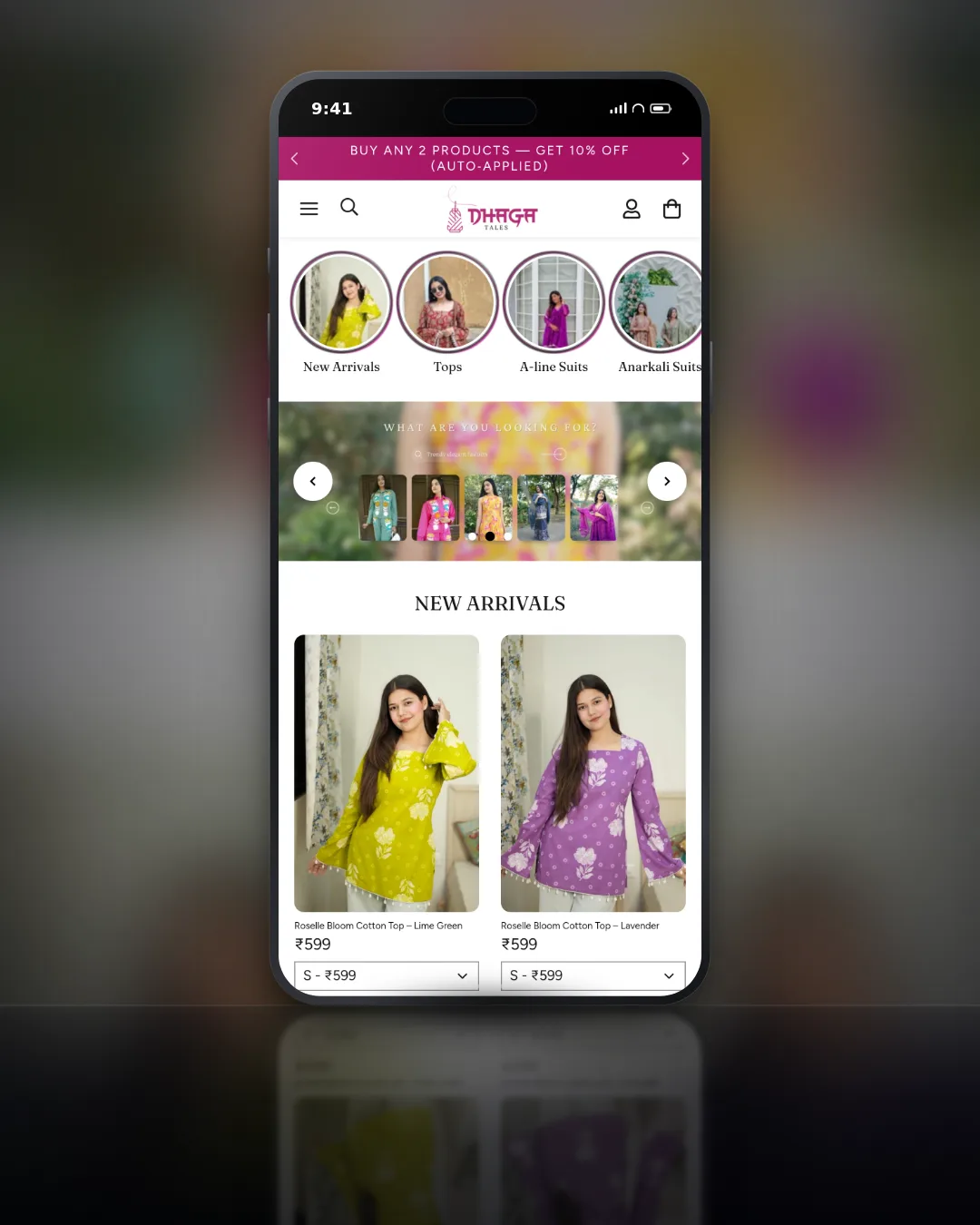
Fashion & Apparel · Shopify
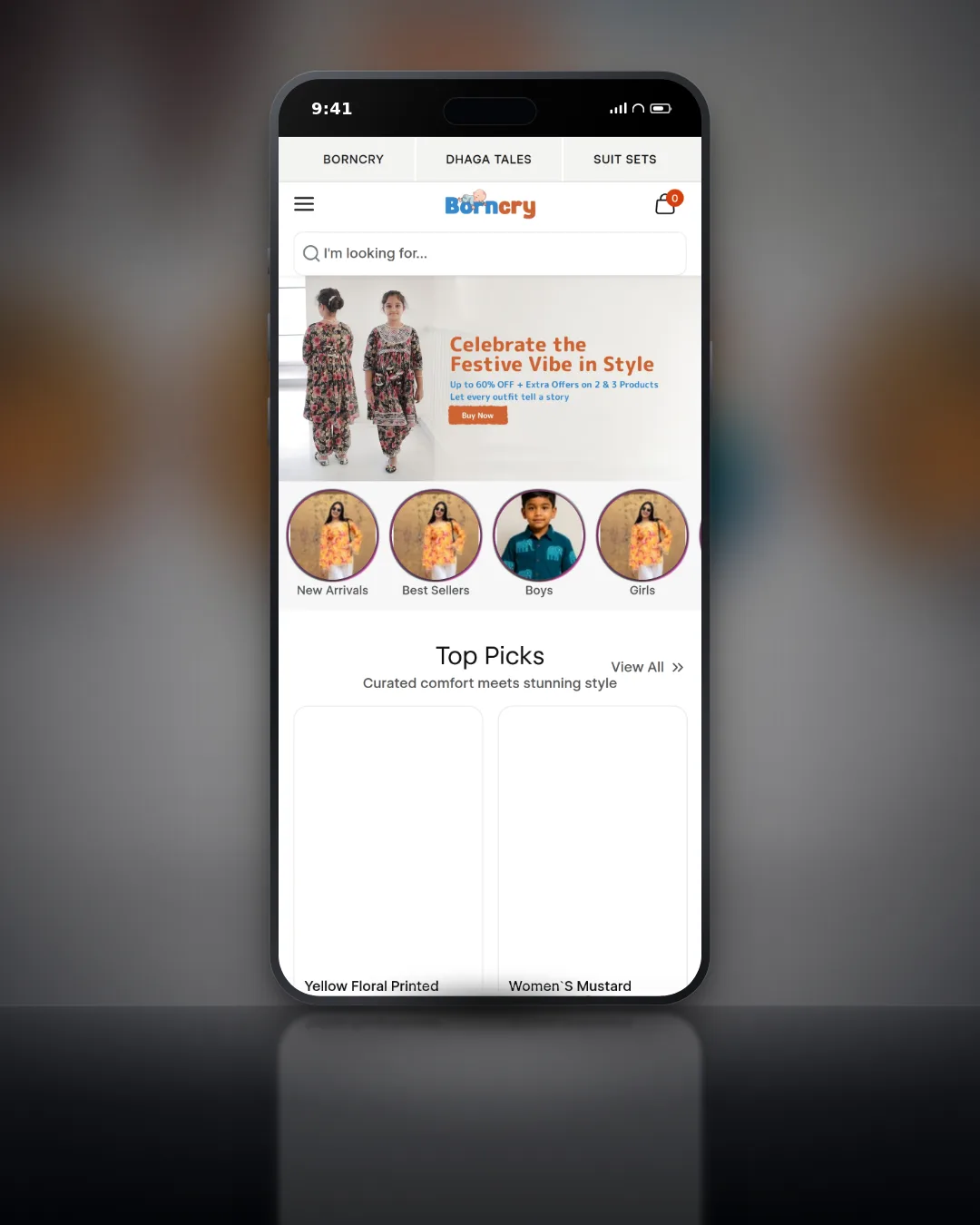
Fashion & Apparel · Shopify

Fashion & Apparel · Shopify
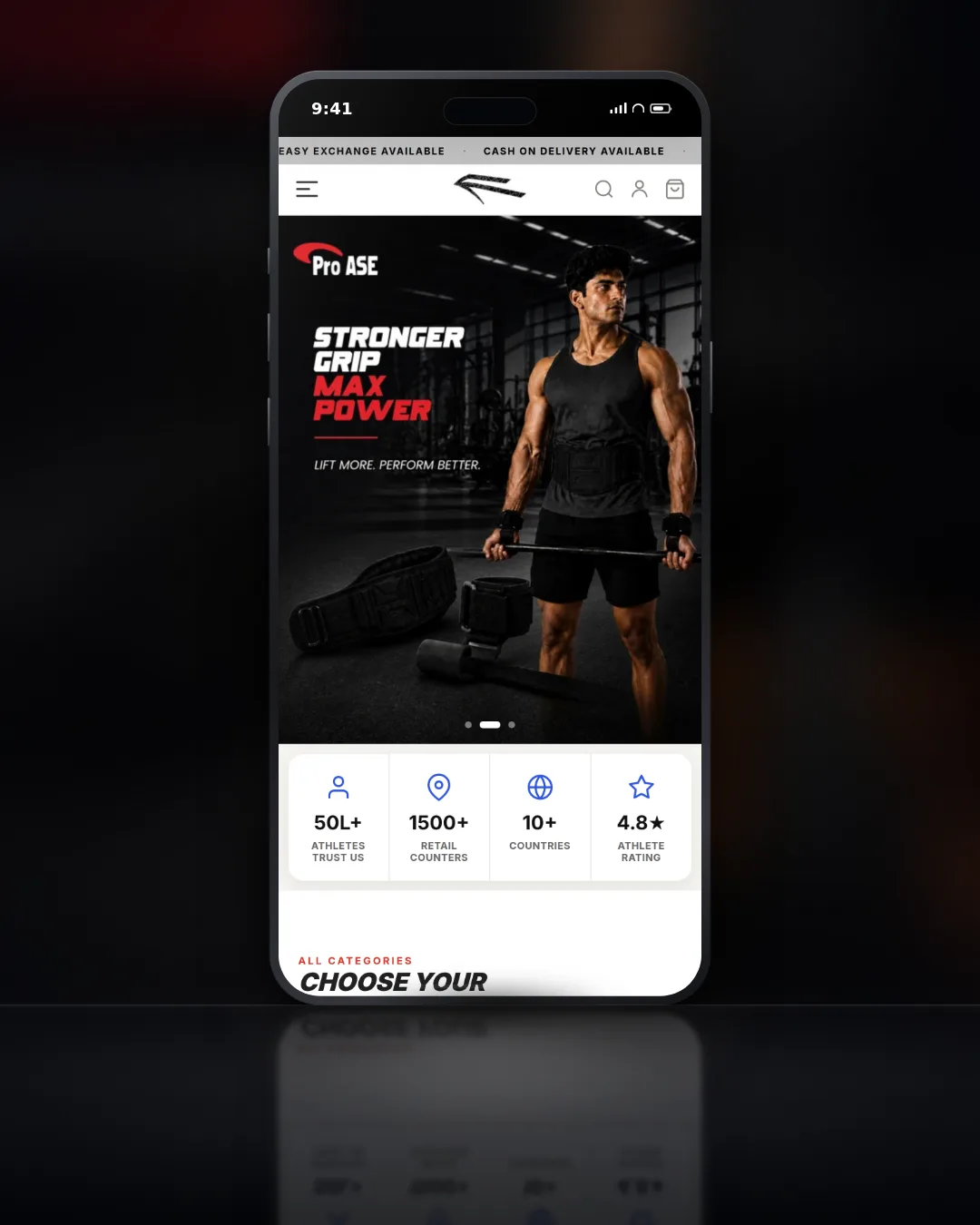
Sports Retail · Shopify 2.0
+38% conversion rate
See every case study
Shopify, WordPress and custom builds, with the brief, the work and the result.
View all workFAQ
If yours is not here, put it in the form and you will get a real answer rather than a brochure.
You pay a smaller fixed base fee to cover the work, plus an agreed share of the revenue the ads bring in above a baseline. The baseline is what the account was already producing before we started, written down before any work begins. So you never pay a share of sales you would have made anyway.
There is no standard figure. The share depends on your margins, the baseline and how much work the account needs, so it is set after the free audit and stated in the agreement before we start. You see the number, the baseline and how revenue is counted in writing before you decide.
Delivered, prepaid revenue only, after returns and refunds, and only the part above the agreed baseline. It is read from your Shopify admin rather than from Ads Manager, because Ads Manager can claim sales that never arrived or were returned. The reconciliation schedule is written into the agreement.
Yes, a smaller base fee that covers the work: account management, creative direction, tracking and reporting. The share sits on top of it and only applies to revenue above the baseline. In a month where the ads do not beat the baseline, the share is nothing and you pay the base fee alone.
No, never, on either model. When an agency is paid a share of spend, its incentive is to spend more, not to earn you more. Our fee moves with results on revenue share, or does not move at all on the flat fee, which lets us tell you honestly when the right move is to spend less.
If your margins are tight or you want a number to plan around, the flat fee keeps the upside with you. If you would rather we carry part of the risk, take revenue share. If unsure, start on the flat fee: after three months of clean numbers, moving to revenue share at renewal is a simple conversation.
Revenue share only works when both sides trust the same number. If Ads Manager, GA4 and Shopify disagree, there is nothing fair to calculate a share from. So the measurement rebuild happens in week one: Pixel, Conversions API and GA4 set up so the revenue figures agree, and the share is reconciled against Shopify.
You do, on both models. We work inside your Business Manager and ad account, and every creative we produce is yours to keep and reuse. If you leave, nothing has to be rebuilt and no asset is held back. One month of notice either way, with no lock-in.
Analyst access to the ad account is enough, with no admin rights needed. A look at your Shopify orders for the same period lets us compare reported and delivered revenue. The written audit arrives in 5 working days and is yours to keep, even if you decide not to work with us.
The map pack is ranked on three things Google names publicly, and only two of them are yours to change. Here is what that means in practice for a Jaipur business, and which of the usual local SEO advice is a waste of your time.

Most of the risk in a WooCommerce to Shopify move is not the product data. It is the URL map, the things that were plugins and now have to be rebuilt, and in India the payment gateway, which does not come across at all.

Shopify handles a lot of technical SEO for you and leaves a specific set of problems it cannot fix. Here is which pages to fight for, the duplicate URL trap every store has, and what to do about supplier product copy.
Free, and yours to keep
A written audit by the person who would run the account. You keep it whatever you decide.
Written audit in 5 working days
Structure, tracking, creative and wasted spend over 90 days.
Terms in writing
Baseline, base fee and share agreed before we start.
Tracking fixed in week one
One revenue figure both sides trust.
Tell us what you are running today, roughly what you spend, and that you are interested in revenue share.
