Client and member portals
Sign-in areas where your customers, members, students or alumni see their own data, documents, invoices and requests.
 Laravel
 CodeIgniter


Custom web application development in Jaipur: client portals, admin dashboards, booking systems, CRM and ERP-style internal tools, built in Laravel and CodeIgniter 4. A fixed price in the contract, a staging URL from the first sprint, and the code is yours.



The same stack this website runs on.
Impulsebyte.com and its admin are a Laravel and Livewire application we build and run ourselves.
30d
Free support after launch
100%
Code you own
What we build
When a ready-made product would force your team to work around it, a custom web application fits the way you already work, and grows with you.
Sign-in areas where your customers, members, students or alumni see their own data, documents, invoices and requests.
Laravel
CodeIgniter
One place for your team to run the business: records, approvals, reports and exports, with each role seeing only what it should.
Laravel
Livewire
Appointments, rooms, tours or services with live availability, reminders and online payment.
Laravel
 Razorpay
Enquiries from your website, WhatsApp and calls in one list, with owners, follow-up tasks and a history of every contact.
Laravel
 WhatsApp
Stock, orders, purchase, dispatch, field teams or service jobs: the spreadsheet your team has outgrown, turned into an application.
CodeIgniter
MySQL
Quotes, proposals, GST invoices, payment links and receipts, with reminders sent for you.
Laravel
 Cashfree
Built on Laravel
Impulsebyte.com runs on Laravel 13 and Livewire 4, with an admin we built for our own team. It is the kind of application we build for clients, and you are using it right now.
Laravel
Livewire
 PHP
MySQL
Tailwind CSS
 Alpine.js
Pages, services, case studies, blog, media and menus managed by the team, with a dashboard of what needs doing today.
Proposals clients accept online, GST invoices with payment links, and receipts.
Every enquiry tracked to a lead with tasks, and a portal where clients sign in to see their own documents.
Changes that wait for approval, and content that goes live at a set time.
Two-factor authentication for staff, sign-in lockouts and a log of security events.
Backups that are checked, with an option to keep a copy away from the server.
Choosing a framework
Both are mature PHP frameworks and we build in both. The right one depends on the size of the application, how long it has to live and where it will be hosted. You get the recommendation in writing.
| Criteria |
LaravelFull-featured PHP framework |
CodeIgniter 4Lightweight PHP framework |
|---|---|---|
| Best for | Portals, booking platforms, SaaS and data-heavy applications | Admin panels, CRM panels and internal tools |
| Background jobs | Queues, events and scheduled tasks built in | Scheduled tasks, with queues added when needed |
| Ecosystem | Very large: packages for most common needs | Smaller, with less to learn and maintain |
| Hosting | A VPS or managed server suits it best | Runs well on modest shared or VPS hosting |
| Interactive screens | Livewire for live screens without a separate front end | Plain server pages, with JavaScript where needed |
| We recommend it for | Applications with many integrations and a long life ahead | Focused tools where simplicity and speed matter |
Swipe the table to compare.
Need a website, not an application?
Marketing sites, WordPress and MERN builds are covered on our web development page.
Built in, not bolted on
The parts nobody sees in a demo, and the ones that decide whether the application is still easy to run two years later.
Every screen and every action checked against the user's role, not just hidden from the menu.
Laravel
CodeIgniter
CSRF protection, XSS prevention, rate limiting on sign-in, validated uploads and an OWASP Top 10 checklist before launch.
PHP
 JWT
Who changed what and when, for the records that matter to your business.
MySQL
Emails, exports, imports and third-party calls run in the background, so screens stay fast.
Laravel
 Redis
Database backups, error monitoring and uptime checks set up before handover.
 Sentry
 DigitalOcean
Setup steps, environment notes and how the main parts fit together, so another developer can pick it up.
 GitHub
 Git
Integrations
Payments, messages, shipping and data, connected through each provider's API. Every integration is quoted on its own, after we have read the provider's documentation.
Payments
Razorpay
 PhonePe
Cashfree
 PayU
 Stripe
Messaging and email
WhatsApp
 Brevo
 Mailchimp
Shipping and maps
 Shiprocket
 Google Maps API
Data and workspace
 Google Sheets
 Google Workspace
 Looker Studio
Need one system connected to another, without a new application? See API integration.
Our process
Most applications take 6 to 16 weeks, depending on roles, screens and integrations. The milestone dates go into your contract.
Step 1
Users, roles, data and integrations written up as a technical specification with an ER diagram, API contracts and a fixed quote.
Step 2
Wireframes and screens for every role, and a clickable prototype you approve before development starts.
Step 3
Weekly sprints with commits to a private GitHub repository. You test each feature on a staging URL as it is built.
Step 4
Role and permission tests, upload and input checks, cross-browser testing and the OWASP checklist, with fixes before launch.
Step 5
Deployment to your server, SSL, email, backups and monitoring, handover documents, then 30 days of free bug fixes.
It starts with a paid code audit and a written report, so you know about bugs, security gaps and architecture problems before any new work is quoted.
Our work
A full public-facing alumni site plus a 3-tier role-based admin system in CI4 with Student, Super Admin, and Batch Coordinator roles.
Read the case study3 Live
User Roles
9
Admin Pages
8
Public Pages

Food & Hospitality · Hospitality
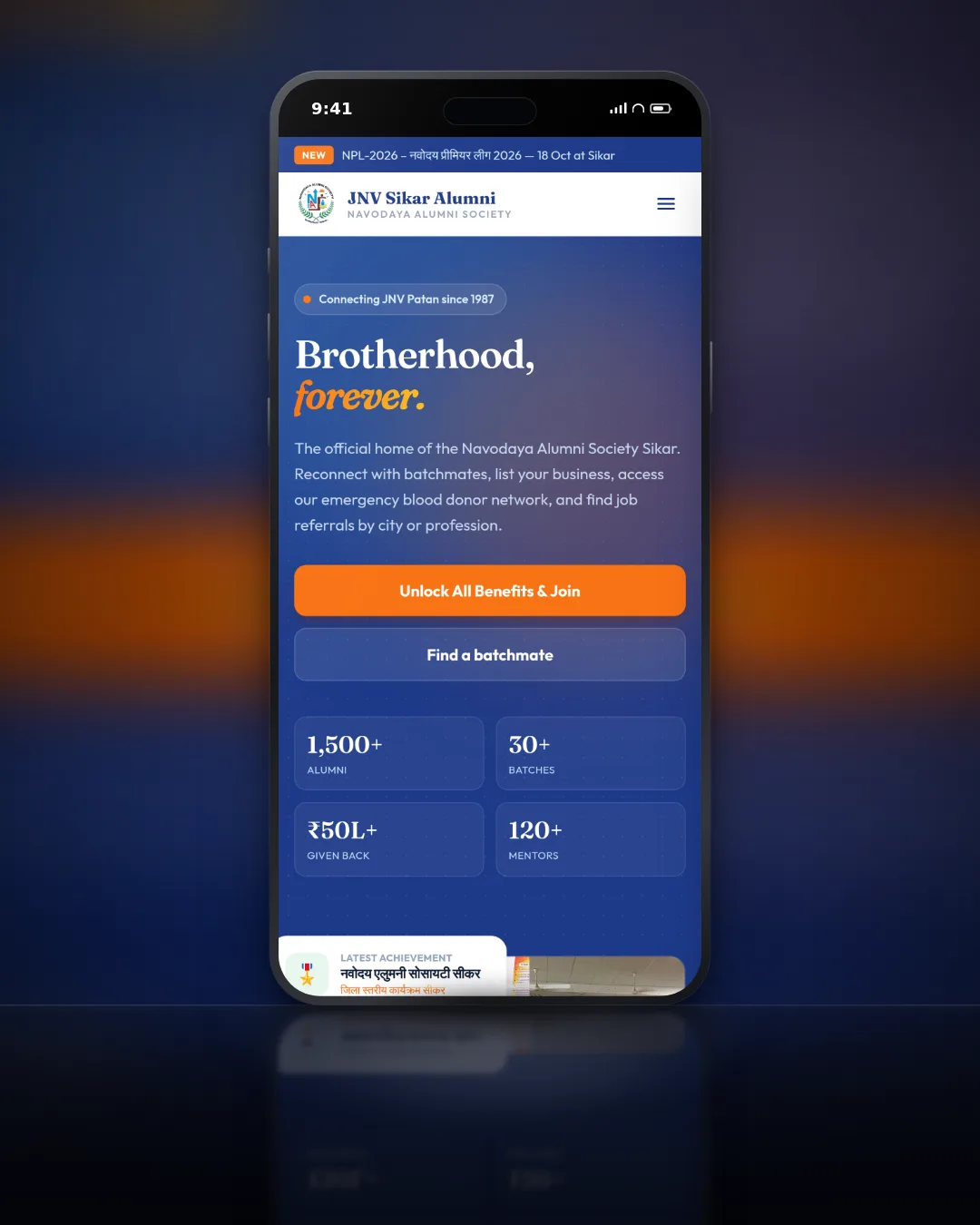
Education / Non-Profit · CodeIgniter 4
3 Live user roles
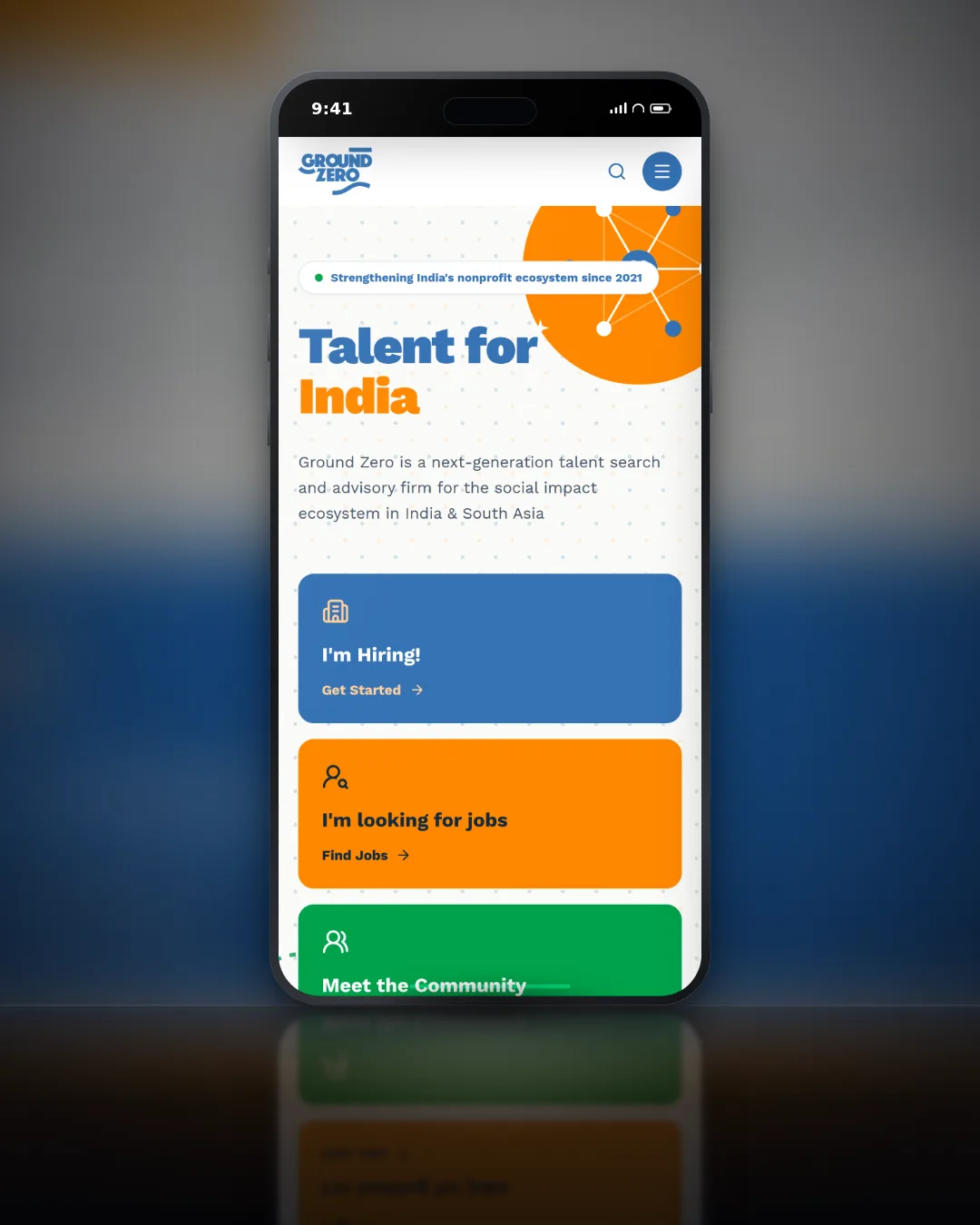
Talent Search & HR Advisory · Recruitment
4 Live content modules

Luxury Interiors / Architecture · CodeIgniter 4
Centralised media management
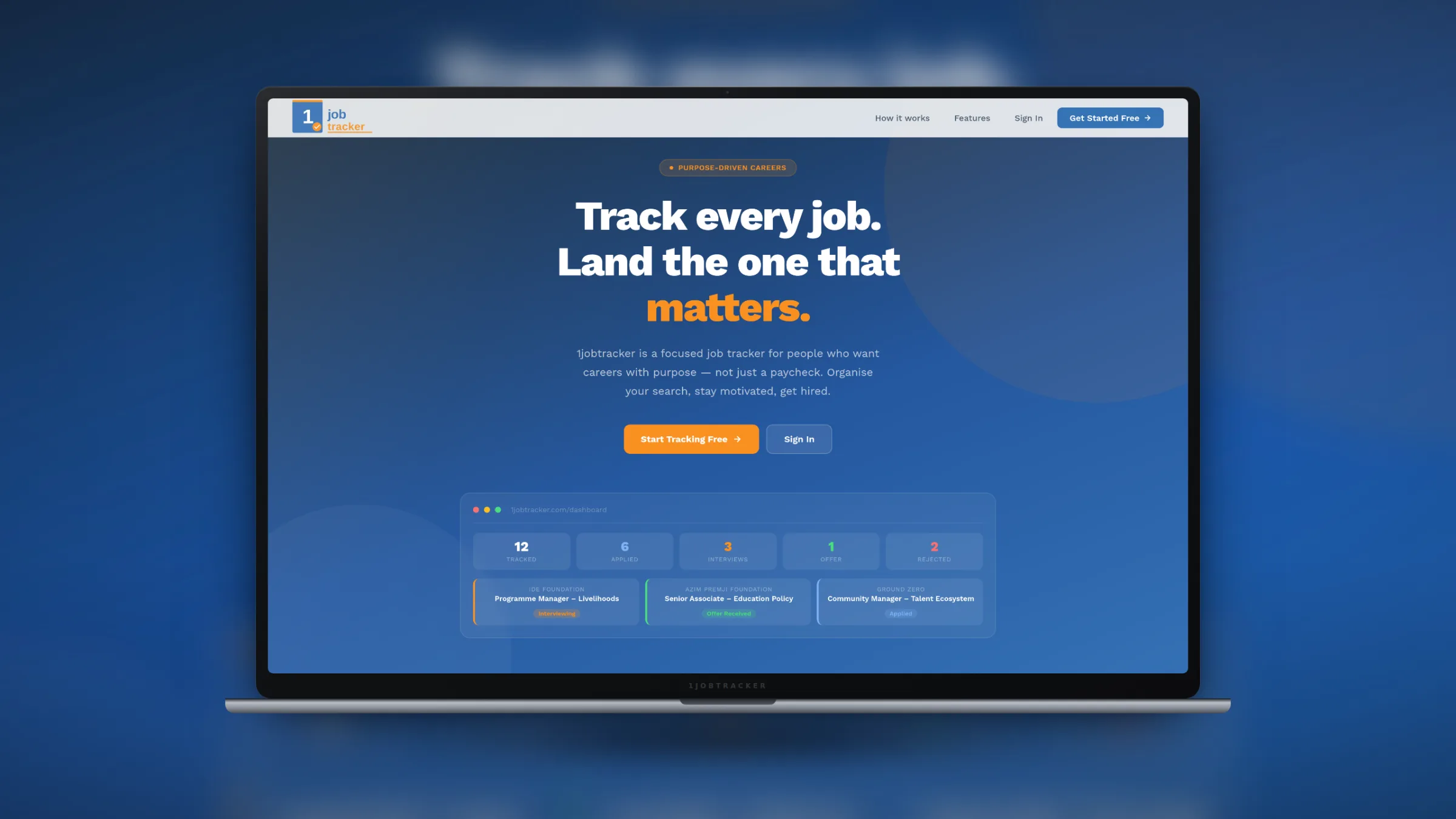
SaaS & Products · Laravel
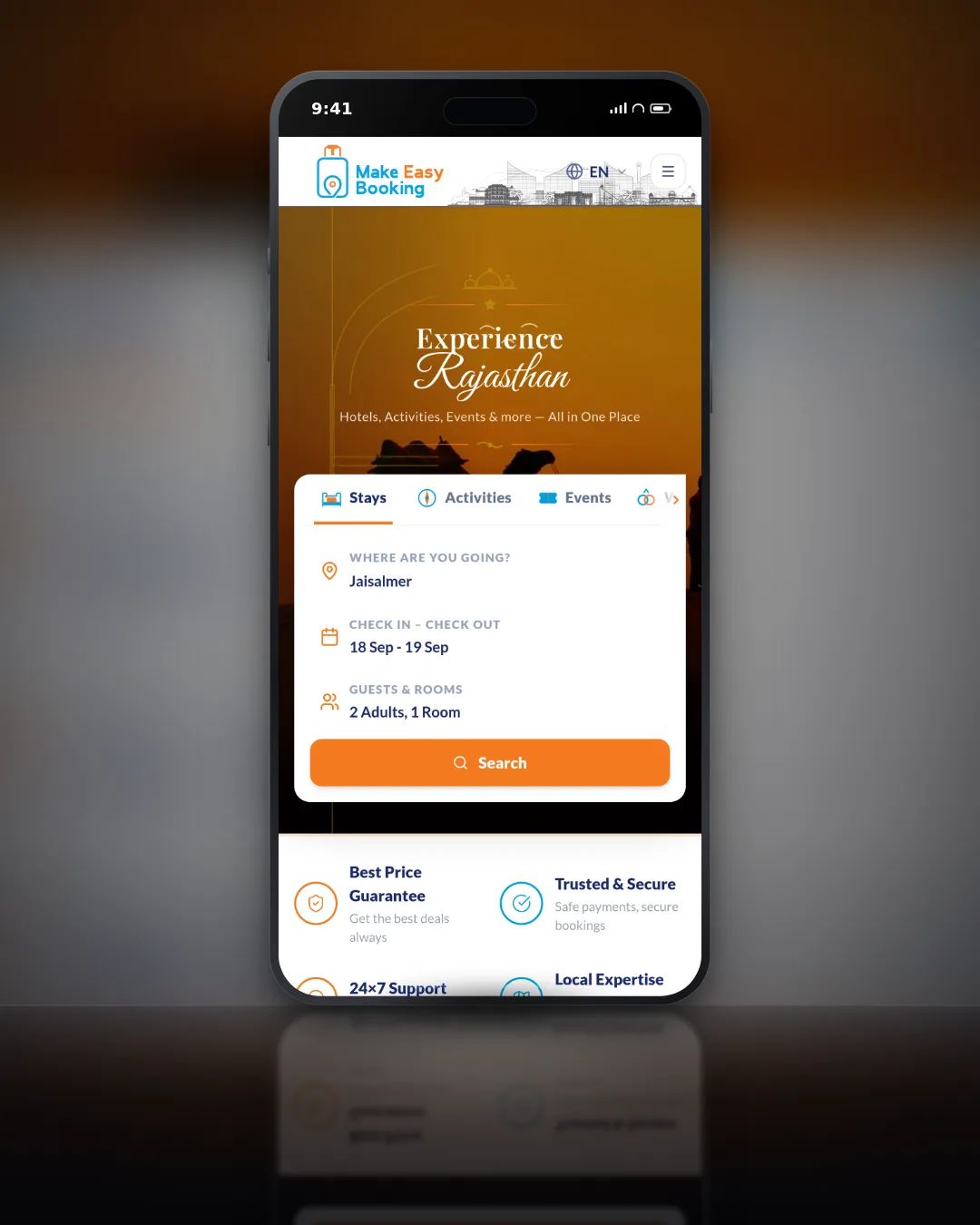
Travel & Tourism · Laravel
8 pages built
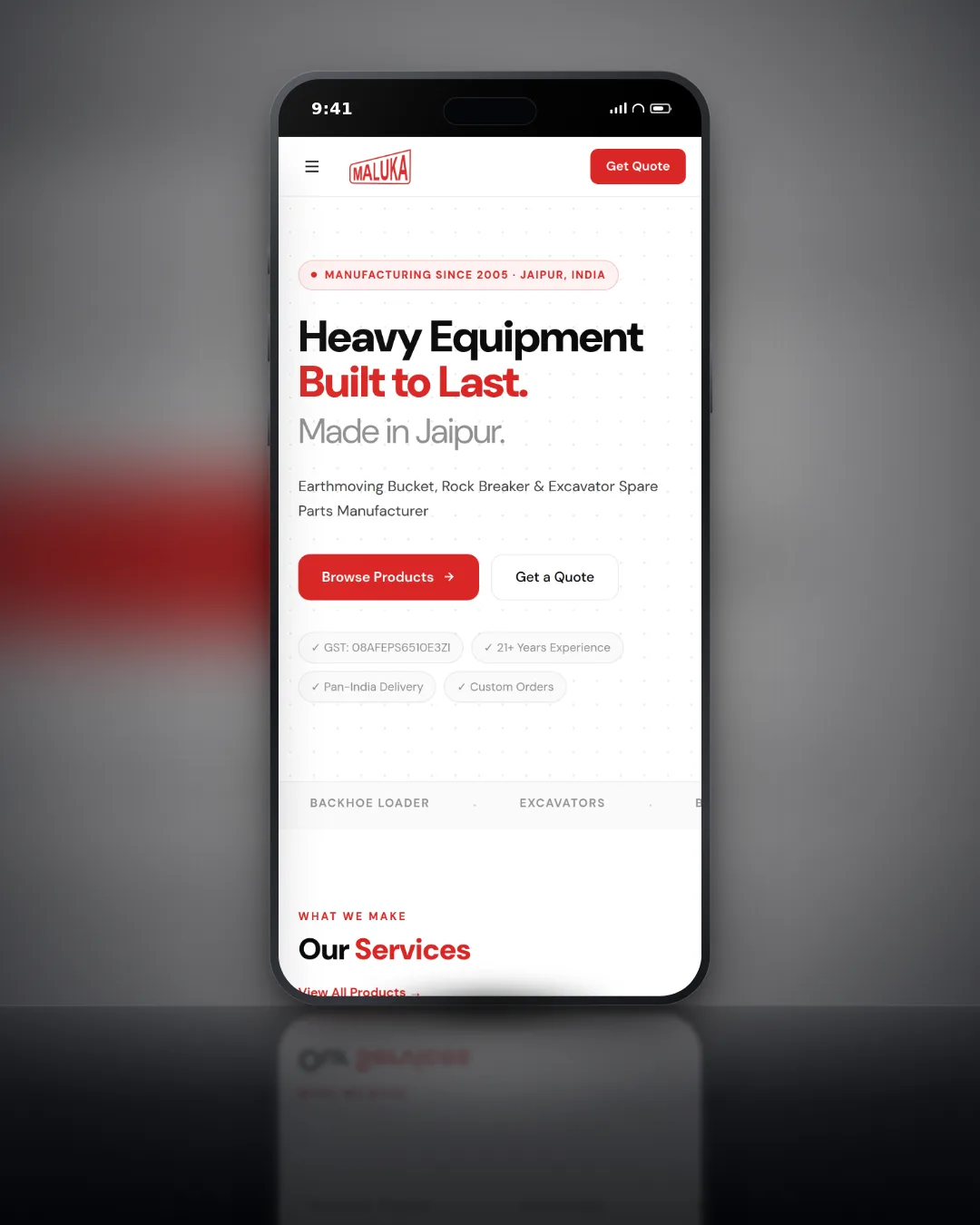
Heavy Equipment / Construction · CodeIgniter 4
Hardened auth system
See every case study
Shopify, WordPress and custom builds, with the brief, the work and the result.
View all workPricing
Every application gets a fixed quote after a free discovery call. These ranges show where most projects land; yours depends on roles, screens and integrations.
CI4 / Laravel web application
Full-stack web application: multi-role auth, admin panel, REST API, MySQL database design and deployment. Scope determines price; audit first, quote second.
₹75,000 to ₹2,50,000
6 to 16 weeks
API integration
Per integration: payment, CRM, shipping and similar systems connected to your application.
₹20,000 to ₹80,000
1 to 3 weeks
Security audit + hardening
OWASP Top 10 audit of your CI4, Laravel or WordPress platform. Vulnerabilities found, fixes implemented, re-tested and signed off.
₹25,000 to ₹60,000
1 to 2 weeks
Development retainer
A dedicated full-stack developer for new features, fixes and performance work.
From ₹10,000 /month
After launch, or for an existing product
Every project gets a fixed-price quote after a free discovery call. Hosting and third-party licences are separate.
Not sure what your application needs?
Tell us how your team works today. You get a written approach, the framework we recommend and a fixed-price quote.
FAQ
Still have a question? Ask our development team directly in the form below.
A CodeIgniter 4 or Laravel application with multi-role sign-in, an admin panel, a REST API and deployment usually falls between ₹75,000 and ₹2,50,000, depending on roles, screens and integrations. Each extra integration is quoted separately. You get a fixed price in writing after a free discovery call, before any work starts.
Most applications take 6 to 16 weeks. A focused tool for one team sits at the short end; a portal with several roles, payments and integrations sits at the long end. The specification in the first week sets the scope, and the milestone dates go into your contract.
Laravel suits larger applications with queues, many integrations and a long life ahead, and it has a large ecosystem. CodeIgniter 4 is lighter and simple to host, which suits admin panels, CRM panels and internal tools. We work in both and recommend one in writing, with the reasons, before you sign.
Yes, all of it. On completion and full payment, the source code, assets and documentation are yours, through a private GitHub repository. There is no lock-in and no licence fee from us, so you can host it anywhere and have any developer continue the work.
Yes. We start with a paid code audit and a written report on bugs, security gaps and the state of the architecture, so you know what you have before new work begins. From there we fix, extend or rebuild parts of it, whichever the report shows is sensible.
On a server you own: DigitalOcean, AWS, Hostinger or another provider that suits your budget. We set up the deployment, SSL, email sending, backups and error monitoring before handover. If you want the server looked after afterwards, our managed hosting covers patches, backups and uptime.
Security is part of the build, not an extra. Every route checks the user's role, inputs and uploads are validated, sign-in is rate limited, and forms are protected against CSRF and XSS. Before launch we run an OWASP Top 10 checklist and fix what it finds. Two-factor sign-in can be added for staff accounts.
Usually, yes. We connect payment gateways such as Razorpay, PhonePe and Cashfree, WhatsApp and email, Shiprocket, Google Sheets and other systems with an API. Each integration is priced on its own after we have read the provider's documentation, so the quote reflects the real work.
Bugs are fixed free for 30 days after launch. After that, a development retainer from ₹10,000 a month keeps a developer on your application for new features, fixes and performance work, with a monthly progress report. Many clients add features in small steps once the first version is in use.
About an hour a week works for most clients: a short weekly demo, testing new features on the staging URL and answering questions on WhatsApp. The first week needs the most time from you, because that is when we write down how your business actually works.
The map pack is ranked on three things Google names publicly, and only two of them are yours to change. Here is what that means in practice for a Jaipur business, and which of the usual local SEO advice is a waste of your time.

Most of the risk in a WooCommerce to Shopify move is not the product data. It is the URL map, the things that were plugins and now have to be rebuilt, and in India the payment gateway, which does not come across at all.

Shopify handles a lot of technical SEO for you and leaves a specific set of problems it cannot fix. Here is which pages to fight for, the duplicate URL trap every store has, and what to do about supplier product copy.
Start your application
We reply with an approach, a framework recommendation and a fixed-price quote, with no commitment.
A written specification
Roles, data, integrations and a fixed-price quote.
Built where you can see it
Weekly demos and a staging URL from the first sprint.
Security checklist at launch
An OWASP checklist on every application before go-live.
Who will use it, what it should do, and which tools it has to connect to.